

Emily Kemper | The Chronicle
Getting a driver’s license is a major milestone for many high school students as they gain independence and prepare for the future. However, rising prices at the pump limit how far and how often some teen drivers can use that newfound freedom.
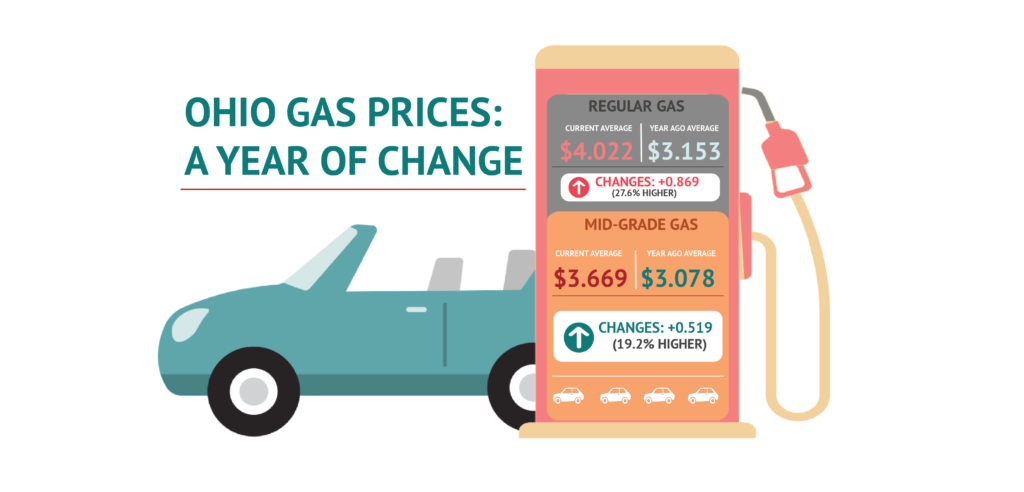
The American Automobile Association (AAA) reported the national average price per gallon of regular gas was $4.042 as of April 20, the first time since August 2022 that prices have topped $4. The U.S. Bureau of Labor Statistics reported a 21.2% surge in prices in March 2026, the largest monthly increase since 1967. Analysts say the spike reflects global pressures, with the Strait of Hormuz, a passage where 20% of oil is transported, under threat.
Mason High School (MHS) junior Hannah Landeros handles transportation for both her and her sister. Landeros said that because of this price increase, she has had to rework how much of her paycheck needs to be put aside for gas, and how much goes to other expenses like car insurance.
“I have to cut down on how much I put in my investment account and the freedom that I have to go to my other spots, like Target [or eating out] because I have to keep in mind that I have to pay extra for gas,” Landeros said. “Is it really worth it to go [out] if I’m gonna have to pay $40 to fill a tank?”
MHS junior Josie Woodruff said she has also had to be mindful of her personal finances due to higher fuel costs. Woodruff said she began carpooling and searching for the cheapest gas to accommodate for the higher amount of money she has had to spend on fuel.
“Before, I wouldn’t really mind [because prices] were about the same,” Woodruff said. “Now I need to do anything to try to find the lowest one. I used to go to UDF, but after their prices changed, I take my mom’s card [and go to] Costco. It’s still more, but not as much as other places.”
Carpooling has become a major mode of transportation for MHS junior Corinne Hartmann as well. To save money, Hartmann and her teammates ride together to their diving practices at Northern Kentucky University and Miami University. Although Hartmann does not pay for her gas herself, she said she is aware of how changing prices affect her family.
“Four to five times a week I’m driving anywhere from 30 minutes to an hour [to practice], and over time it definitely adds up,” Hartmann said. “It can turn extracurriculars or everyday activities into a financial decision. That is a burden for any teen or any family, especially when we’re so dependent on driving to get to work, sports [and] extracurriculars. I think we’re more dependent on driving than we realize.”
Sophomore Madeline Nusser is newly licensed and is planning for the impact of fluctuating gas prices. Nusser said her parents are currently helping her pay for gas, but eventually she will have to get a job to cover the cost and be able to go out with friends.
“It’s a conversation I’ve had [with my family],” Nusser said. “I’m not going to do summer lacrosse next year so that I can get a job. Right now I want to save my parents money because it’s not mine, so I don’t want to go out and do [extra] stuff.”
Landeros said that this is an important issue for teens to pay attention to as they gain independence and learn how to plan for the daily living costs.
“You wouldn’t realize how much it actually impacts somebody unless you are the one paying for your gas, your car and some of the [expenses] that make you independent,” Landeros said. “Talking to your parents, starting to take accountability and paying for some of your own expenses can open up your eyes and help you prepare you for the future.”