

Michelle Zuo | The Chronicle
“Cute winter boots,” “Cornell, it’s SA, not ESSAY,” and “I love the Disney cruise too!”
What do these phrases mean and what are they considered? Are they codes, protests or slang? As major events, such as the Gaza genocide and the recent Cornell Seven case have become major topics of discussion on platforms such as TikTok, social media users take to their own — albeit questionable — methods of activism online.
The Cornell Seven case and the explosion of online commentary surrounding the situation and lawsuit are what brought me to this topic. The case involves a lawsuit against seven Cornell University Chi Phi fraternity members for the sexual assault of a former Cornell student identified as “Jane Doe.” The incident occurred in September 2024. I remember seeing a screen recording of someone blocking the Cornell Birdwatching Club’s Instagram account, the text on the screen reading, “It’s a shame that I have to block them.” None of the people involved were in the Cornell Birdwatching Club, so it made me wonder: what does blocking that account actually do?
I’ve seen people spam Cornell’s social media with messages, comment repeatedly on posts covering recent issues with the “secret codes” relating to the Epstein files and post slime rant videos about boycotts over the Gaza genocide. I understand the intent of holding those responsible for these issues accountable, but I’ve questioned the effectiveness of these approaches. To me, it seems like it is “just for show.”
Which is where the term “performative activism” comes from. Activism is attracting new supporters, but not in the way that it should. Social media is an incredibly impactful tool; it allows individuals, especially young people, an easily accessible place where they can advocate freely. However, I’ve found that an unintended consequence of this is that activism has become a “trend” for many to prove themselves the “most moral.”
We all have our own versions of morality, and it’s also in humans’ nature to want others to perceive us as moral or “good” people. Especially in an age where social media shapes how we see others and how others see us, wouldn’t we all want to look like the best versions of ourselves?
In 2020, there was a surge in the Black Lives Matter (BLM) movement — an international social movement that focused on fighting racism, anti-Black violence and police brutality — following the murder of George Floyd. My brother was a high schooler and encountered his classmates’ Instagram reposts that said, “If you’re not against BLM, repost this on your story (I can see everyone who views my story).” He was torn between two sides: he didn’t want to be a “bad person” by not reposting, but he also didn’t want to put others in a similar situation by continuing the chain.
These types of posts do spread awareness, but they also taint the severity of an issue. People begin to associate important movements like BLM with guilt-tripping stories, instead of the actual purpose of the movement.
Another example of this was during the ICE protests at the beginning of 2026. The harmless-appearing phrases, “I prefer my ICE crushed” and “cute winter boots” were originally used to bypass shadowbanning on social media. But the issue arose when people began using these codes with silly, inappropriately placed graphic interchange formats (GIFs) in comments and posts. Users, including myself, began associating the ICE protests with these codes that were viewed as jokes on social media.
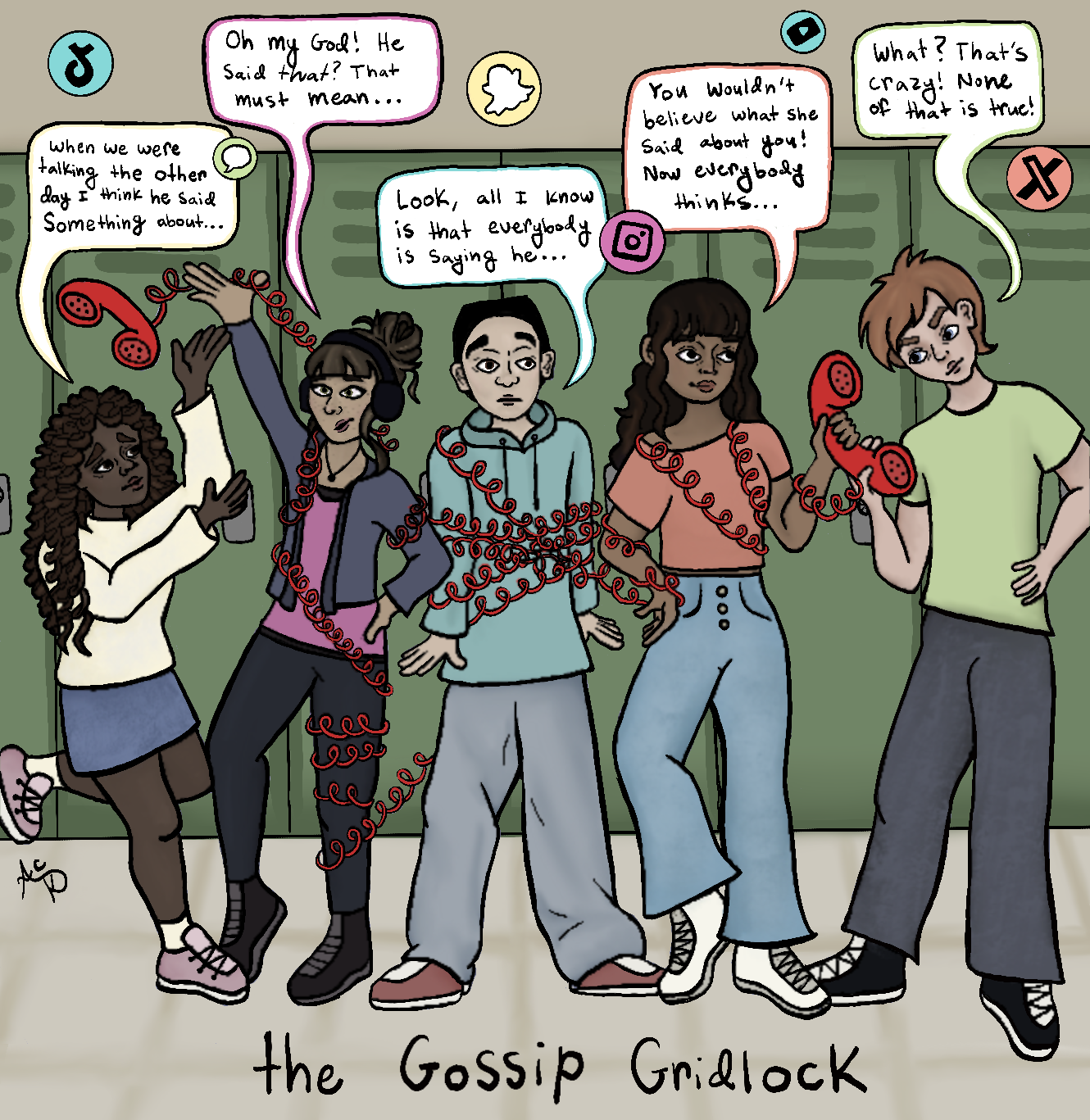
The more widespread an issue becomes, the more knowledge shared, and the greater the impact. However, the larger scope of awareness also amplifies the negative consequences of performative activism. Advocacy like this becomes a game of telephone; the more people sharing over and over, the more information that’s lost in translation. This leads to misinformation, exaggeration that can create fear mongering and the reversal of progress through activism.
On all social media platforms, there are creators that work to accurately inform, represent and educate on major issues impacting our world. For all the harm that performative activism can cause, there are just as many ways to counteract it. Whether it be through supporting these creators, reading the news or engaging in real conversations, everybody is capable of advocating for what they believe and keeping themselves accurately informed.
Society cannot uphold its virtue and righteousness if it is unable to properly hold its own members accountable, nor can it progress with large numbers of members that are unaware of the world around them. Activism is the start for improvement, but it can’t just be an appearance to keep up on social media -— we must be genuinely invested in positive change if we wish to see it. After all, what good is a society that prides itself on having morals if morality becomes a competition to be won?