
Grace Ai | The Chronicle
It is easy to sit back and let a computer take care of the hard things for you; to let it unshackle the burdens of responsibility when the clock ticks too close to the deadline. I mean, how many times have you already done that? When life feels like a nonstop race towards a finish line you can not see, turning off your brain and floating down that easy path can seem irresistible. But you can not do so unless you are willing to pay a steep price, one that most people do not realize: your freedom. No matter how enticing convenience is, we cannot trade our freedom for the sake of it.
In Season 2, Episode 7 of The Twilight Zone, titled “Nick of Time,” a man stumbles upon a fortune-telling machine bearing the head of the Devil; whenever he asks it a question, the machine gives him an answer that proves itself to be true. Over time, he becomes obsessed with it, constantly asking the machine for answers until he completely loses the ability to think for himself, his thoughts and actions now dictated by whatever the fortune-teller tells him as the price of his deal with the Devil. In using the machine, the machine began using him.
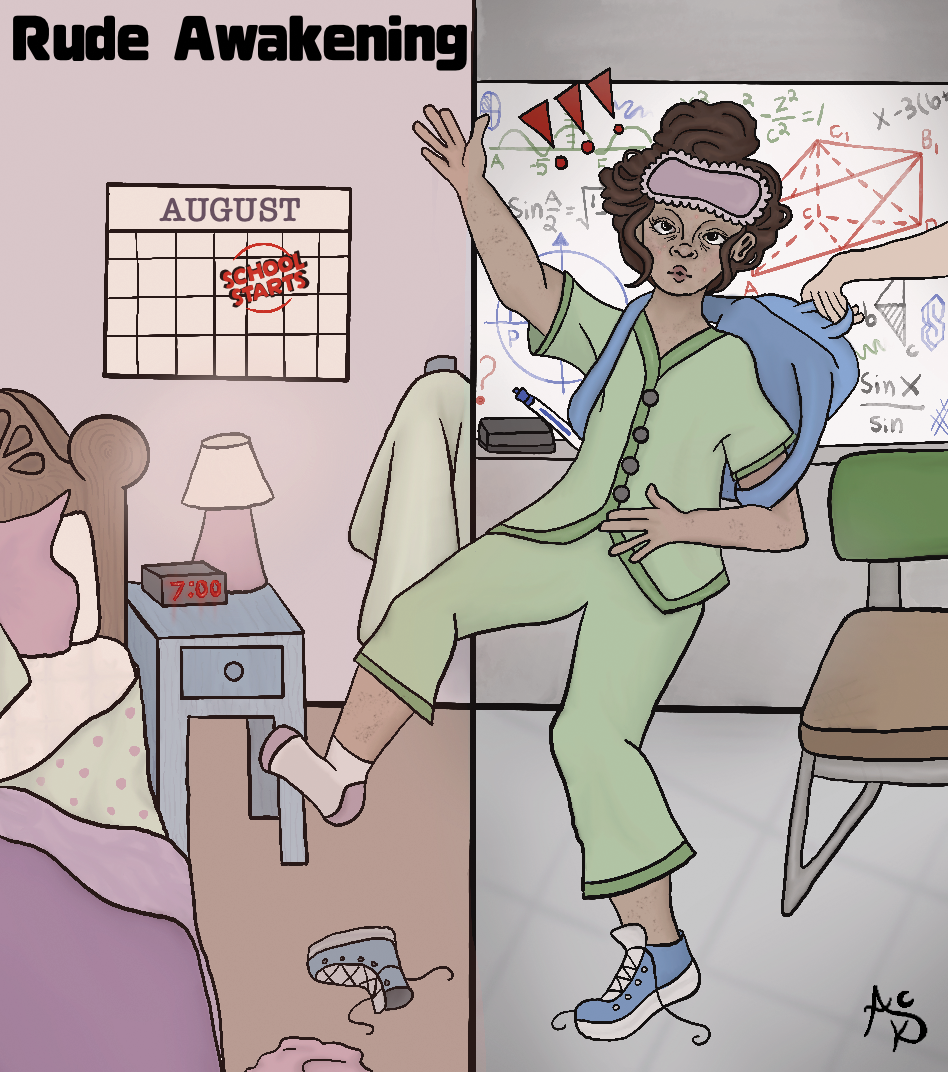
Hopefully, this eerily reminds you of Artificial Intelligence (AI) and the way that many people use it now. People constantly use it to do their work for them, write emails and in some extreme cases, use it as a cheap substitute for human connection. Like the demonic fortune-teller, AI spits out answers that seem like the truth, encouraging individuals to continue using it to the point where some become too reliant on it. Seriously, how many times have people admitted to being unable to do anything without the help of AI, or panicked when it shut down right before an important project was due? The ability of our desire for convenience to so easily strip away our free thinking is what makes AI so dangerous. When a group of people are dependent on someone else to think for them and tell them what to do, what happens when that power falls into the wrong hands?
With social media, its convenience lies in how quickly it can send up a package of dopamine (the happy chemical) to your brain. Movies, shows and YouTube videos require the viewer to spend much more time focusing on the content before any dopamine is released, sitting down somewhere to properly process it. Short-form content, on the other hand, not only delivers dopamine faster, but it is something that can be consumed anywhere, such as during lunch breaks or in between shifts, which is something you can not do with a movie. Naturally, people spend more time on social media, directly translating into dollar bills for the executives running the platforms — and they have gotten very, very rich off of the hours of attention we pay to their apps. Many of those executives also have some degree of influence in our government and politics; because running for governmental positions requires a lot of money, oftentimes these rich CEOs either support many politicians or are the politicians themselves, as seen with Elon Musk and Donald Trump. This gives them the ability to directly or indirectly have a say in what the government chooses to do and prioritize, which affects the people they’re making these decisions for. By boosting their money with our engagement with such convenient short-form content, we are giving them more power over our lives, whether it be through their platforms or through a government they have gained more influence in.
Although a few quick questions here or there to ChatGPT or doomscrolling for a couple of hours on Instagram do not seem like a big deal, there are potentially dire consequences to these actions, as subtle a trap as it may be. So, put down the phone for a while to let yourself exist even for just a minute or two, or just try to work through that essay you have been procrastinating on. I know it is easy to let go but do not. Unless you are ready to trade your autonomy for a shiny little birdcage, please walk the hard path. In reality, it will be far more rewarding. However, if you do choose to live in that birdcage, know that you might trap us all behind bars with you.