

Maria Ataya | The Chronicle
Energy drinks have become a common sight in schools, bringing new flavors, brands and a growing impact on students’ bodies with them.
Health experts warn that energy drinks’ high caffeine content and marketing are contributing to increased dependence and potential health risks. Despite intake recommendations from professionals, many students regularly exceed safe caffeine limits, unaware of the physical effects.
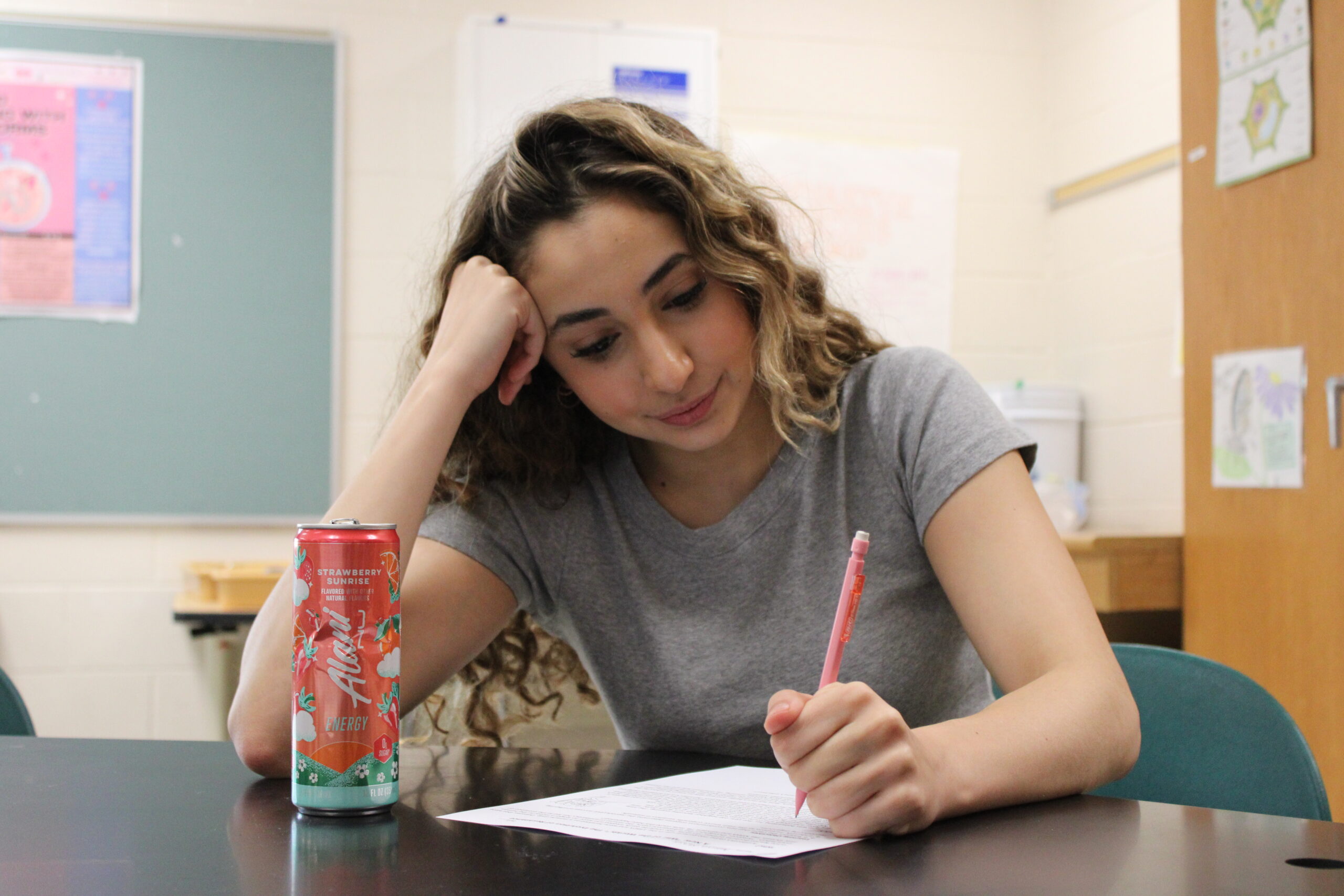
Mason High School (MHS) sophomore Amena Mitiek drinks between five and seven Alani Nu energy drinks per week. One can of these beverages has about 200 milligrams (mg) of caffeine. Mitiek said her reliance on energy drinks began in the middle of her freshman year.
“Everyone was drinking them,” Mitiek said. “When I’d see people carrying Alanis and Celsius, I wanted to try it, so I tried it and then I became addicted. It helps me stay awake throughout the day.”

MHS Sophomore Amena Mitiek consumes Alani Nu energy drinks to stay awake, though she is working towards lowering her caffeine intake.
Mitiek said that consuming energy drinks has become common among her peers and coworkers, especially with how much they are promoted on social media.
“Different flavors come out and everyone is excited to try them, making it become a trend,” Mitiek said. “Afterwards, teens compare energy drinks to each other, influencing people to try different ones.”
Registered dietitian Luna Sakkal has helped people to improve their eating habits and manage various health conditions through personalized nutrition plans for 19 years. Sakkal said energy drink consumption should not be normalized for the youth, though she understands why teenagers turn to them.
“Kids want to increase their performance, either in school or in sports, and they think that the energy boost will help them,” Sakkal said. “Children who consume caffeine can have difficulty sleeping, and may develop behavioral or mental health issues such as increased aggression, anxiety and depression.”
Instead of depending on highly caffeinated drinks that can negatively impact both physical and mental health, Sakkal said teens should turn to healthier, sustainable ways to boost their energy.
“Lifestyle habits such as sleeping early, eating nutritious meals, exercising and hydration have amazing, positive lasting effects on many aspects of our lives including energy,” Sakkal said. “The new generation loves the instant effect of energy drinks as they are used to many things happening in an instant. [Energy drinks] are a quick and easy way to gain energy, but not the safest or healthiest.”
MHS sophomore Ellie Heller said she was addicted to energy drinks, but has now stopped consuming them after seeing their impact on her. As Heller’s energy drink intake grew, she said she became increasingly dependent on them to get through the day.
“I was told by my therapist that I had to stop because of my anxiety medicine,” Heller said. “It was just spiking my anxiety too much, and they were conflicting with each other. It would make me shake a lot, and a lot of the time I couldn’t focus.”
Although Heller’s addiction slowly calmed down, she continued to consume energy drinks afterwards, despite her therapist’s warnings. Later, she experienced a panic attack at school, which prompted her to rethink her consumption of caffeine.
“I was throwing up and I just couldn’t control my emotions,” Heller said. “I couldn’t even think or anything, and I just cried. It made me want to stop drinking Alani’s so I didn’t have that issue again.”
Shortly after she stopped drinking energy beverages, Heller said she noticed a shift in her bodily reaction to everyday situations, feeling in control of her energy levels and having less anxiety.
“After quitting, I felt a lot more relaxed and calmer because my anxiety medicine began to work compared to when I was drinking Alanis,” Heller said. “I don’t shake, and I can focus better in the morning.”
Mitiek also said she experienced side effects from consuming energy drinks daily. When she drinks a caffeinated drink in the morning, Mitiek gets tired as early as midday or the end of the school day.
“Crashes are a big side effect,” Mitiek said. “I’d be so tired and want to fall asleep. I get nervous and have more anxiety, especially if there’s a test, I’ll have more anxiety towards it.”
Mitiek said she underestimated the side effects of energy drinks and that many of her peers do too. She is now working towards turning to healthier options.
“It’s not good to have caffeine like that because it is very addictive,” Mitiek said. “It’s not good to rely on something like that. I recommend fixing your sleep schedule.”
Mitiek and Heller’s reactions to daily consumption of energy drinks are not abnormal. Sakkal said teens have higher chances of experiencing the side effects of energy drinks.
“Due to children’s developing brains and smaller body sizes, they’re more susceptible to the effects and risks of caffeine,” Sakkal said. “They’re still building habits of self-discipline, allowing these risks to either come instantaneously or as a buildup of consumption.”
For teens overcoming caffeine addiction, Sakkal said parents play a key role in shaping habits, with schools providing additional support. Sakkal said parents can help teens build nutritious routines, while schools can provide healthy beverages and educate students.
“Parents should model good behavior for their kids,” Sakkal said. “That way, they help in establishing those healthy habits. Caffeine is addictive, and depending on how much the child or adolescent is drinking, they may want to ask for parental supervision
because there are symptoms of withdrawal that they might experience and need help with.”
While parental guidance plays a role in improving teens’ caffeine consumption, Sakkal said their long-term success depends heavily on building sustainable practices that support their overall well-being, like sleeping early, drinking enough water and eating nutritious meals.
“Energy drinks might give you that temporary energy to get you through the day, but the true boost comes from taking care of your body and building healthy habits that last,” Mitiek said. “Building these habits are not as easy and instantaneous. Persistence and effort are needed to make them happen.”