
Sophie Allen | The Chronicle
With schoolwork often pushing faith to the margins, many Mason High School (MHS) students are welcoming a moment to reset. This year, Lent and Ramadan started on the same day, creating a shared season of reflection for Christian and Muslim students.
Lent is a 40-day Christian religious observance that leads up to Easter. Practices vary depending on denomination, though a common component is the Lenten sacrifice, a pleasure one gives up during the period.
MHS sophomore Riley Chiu has observed Lent his whole life, though in recent years, he has dedicated more time to connecting with his religion through Lent.
“[Lent] is very important to me,” said Chiu. “Even within my family, I was one of the first people to really start taking it seriously. It serves as a sort of benchmark for personal maturity, too.”

In past years, Chiu has sacrificed sleeping in and warm showers. This year, Chiu will give up sweets. Chiu said that the practice helps him to be more mindful and devote more time to his religion.
“The abstinence from doing what you want to do is just like a small element of it,” said Chiu. “It’s the thing that people see first, but there’s a lot of nuance when you look more into it.”
Chiu said that choosing your own sacrifice during Lent opens the door to deeper reflection, as an understanding of oneself is necessary in deciding what to give up.
“There’s a lasting impact that stays with you,” said Chiu. “After doing something difficult like [fasting], it lets you really reflect on yourself; if you take the time to go through with Lent’s purpose, then the fasting itself doesn’t have to continue, but the other practices that you might have picked up during that Lent season can.”
Some who participate in Lent may choose not to share what they are giving up. This year, MHS senior Amelia Eshman is keeping her sacrifice private as a practice of humility.
“As we started out the season on Ash Wednesday, this year’s reading talked about not letting your right hand know what your left hand is doing,” Eshman said. “[This] kind of alludes to ‘don’t do things for a show,’ so I want to keep to myself what I’m doing this year.”
Eshman said that a large part of Lent sacrifices is also replacing bad habits with acts like consistent prayers or charity.
“Lent helps me [engage with God] in a way that’s more real, because there’s a lot more silence during Lent, a lot more patience,” said Eshman. “Everything’s a little bit rawer, especially during our masses. There’s a little less music, everything’s a little bit more somber, and it’s a really good time for reflection.”
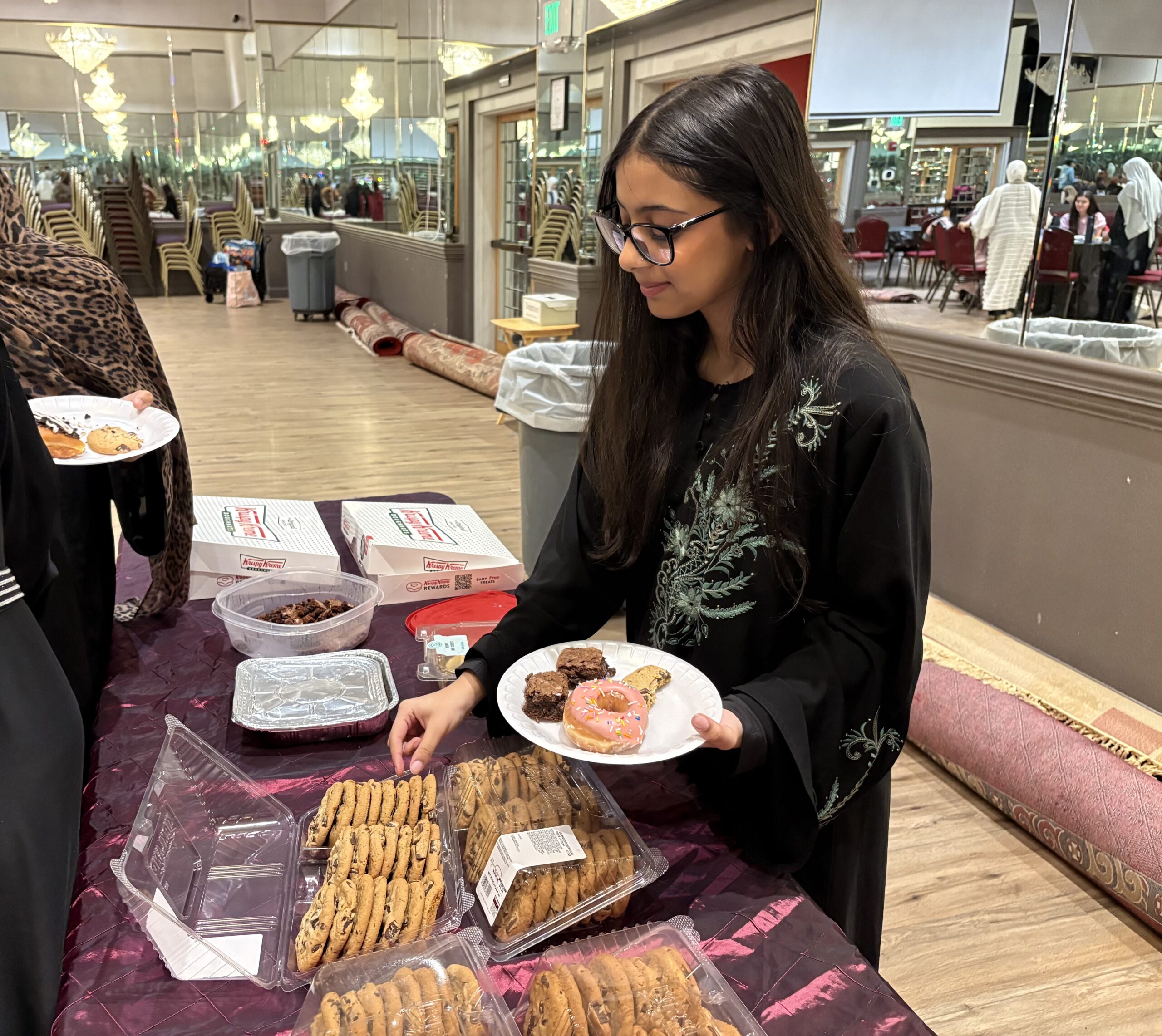
Ramadan is a month on the Islamic lunar calendar during which Muslims fast daily from all food and drink, from dawn to dusk. During the month, the Muslim community comes together to pray taraweeh, an extra prayer, breaking their fasts together at iftar.
MHS junior Nashwa Fazlani said Ramadan helps her reorient herself, her priorities and what is important to her. Fazlani said that while fasting can be tiring, especially when coupled with school, education is something heavily emphasized in Islam and a privilege to be thankful for.
“People really think [fasting] is a difficult thing and feel bad for us, but truly it’s such a blessing and such a blessed month,” said Fazlani. “Being able to fast and come home to a plate of food is something that’s so nice and something I’m so grateful for.”
Lessons from Ramadan do not end after the month is over. Similar to Lent, fasting is more than just abstinence, serving as a time to reflect and establish better habits. Fazlani said that she sometimes sets goals for herself, and that the community and atmosphere of Ramadan help her stay accountable.
“Whenever I feel closest to my faith is when I’m holding myself accountable and trying to better myself,” said Fazlani. “It really reminds me that I need to be nicer or I need to be less judgmental. It reminds me to be a better person because in this month, every action is up to me.”
For senior Jenna Elkilani, Ramadan has been a lifelong practice. As a child, she eased into fasting by practicing half-days before becoming old enough to take on the obligatory fast.
“[When] fasting, you’re thinking about the people who have less than you and who don’t have food and water every single day,” said Elkilani. “You kind of get to feel what they feel, and feel empathy.”
Elkilani said that she especially enjoys the community aspect of Ramadan, and that each year she is happy to see everyone come together during the holy month. She extends this sense of community to her non-Muslim friends as well, who Elkilani said will sometimes fast with her.
“It’s really cool that [Lent and Ramadan started] on the same day and we all got to experience it together,” said Elkilani. “It’s a time to get closer to your faith for both religions, I think. I have a lot of friends who are not the same religion as me, and they’re very supportive.”