
Evelyn Bahm | The Chronicle
There is one player on a soccer field that stands out from the rest. They have a unique objective, unique privileges and a unique responsibility. The goalkeeper is an individual position that acts as the final layer of defense against an opponent.
Being a soccer goalie means holding a unique role for the team, as well as affecting the pace of play, the defensive side of the field and the score of the game. But what does being in that role mean for the goalie? This means lots of waiting for action, but also a role full of quick, high-pressure moments.
Junior Ella Krimpenfort is a goalie on the Varsity girl’s soccer team. Starting to play soccer when she was just five years old, Krimpenfort said she began her soccer journey as a field player rather than a goalkeeper, but was encouraged to play goalie around 10 years old. Krimpenfort also performed as a multi-sport athlete. She said she played softball until seventh grade and quit basketball this year to focus on her role on the soccer team.
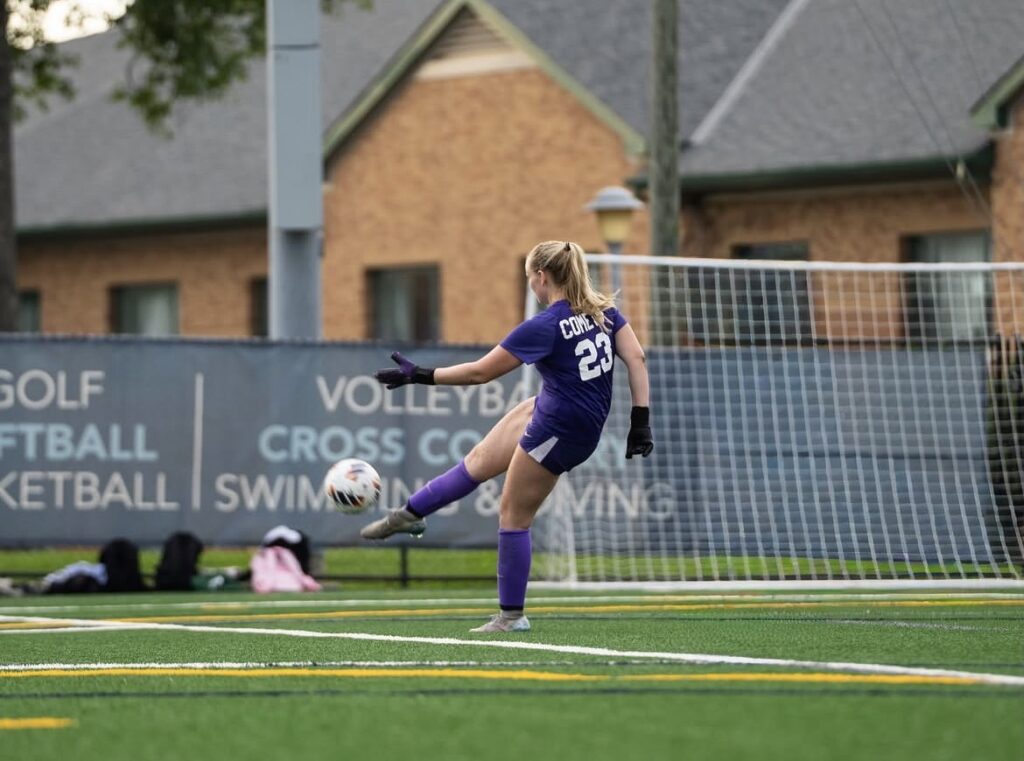
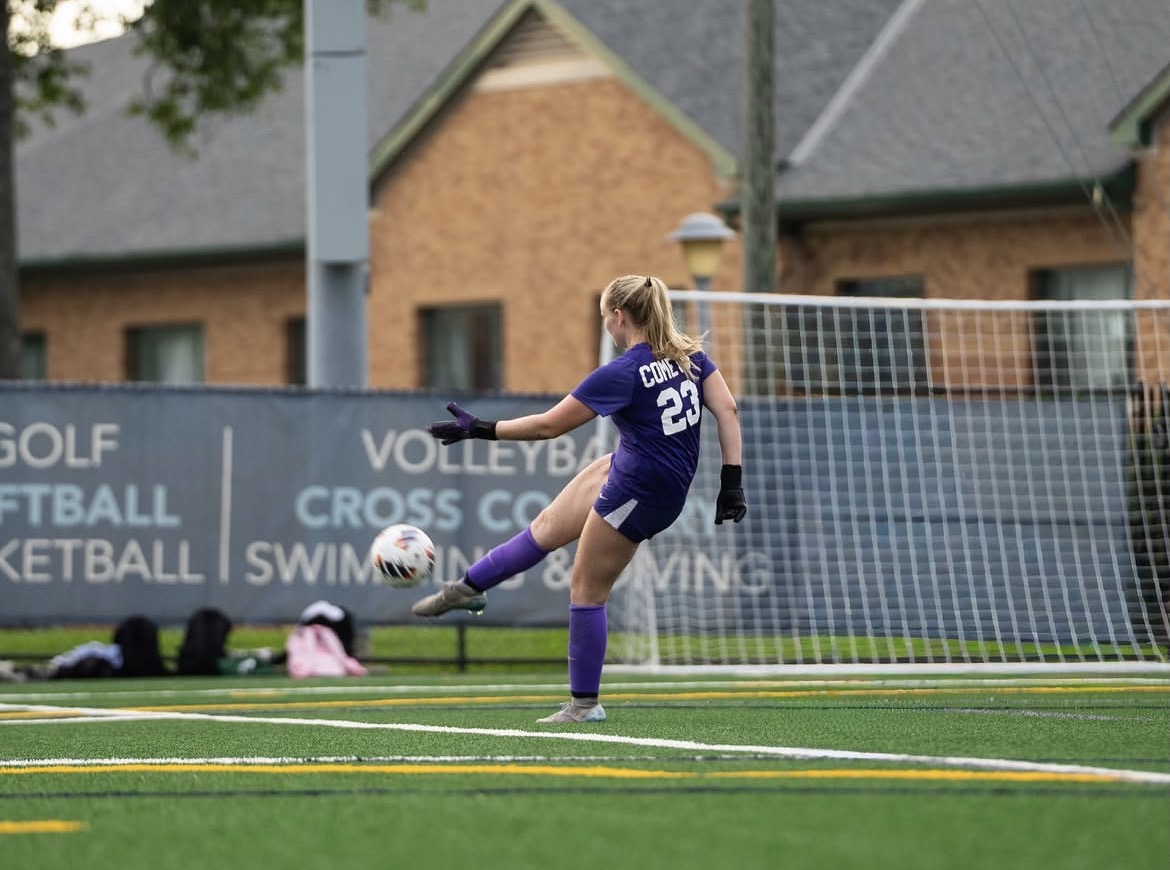
Mason goalkeeper Ella Krimpenfort clears the ball upfield with a powerful kick, defending the net and setting up the next play.
While most of the soccer team works directly to score against their opponent Krimpenfort said that being the goalie puts her in a unique position. She said that while she would never wish to play any other position, goal tending presents some of its own difficulties. She said she finds it hard to focus when so much of the game does not revolve around her role.
“Something that’s really hard about [being a] goalkeeper is you might have a lot of downtime,” Krimpenfort said. “But one save could change the course of the game. It’s super important just trying to stay in it yourself.”
Junior Landen Darling is a goalie for the Varsity boy’s soccer team. Darling said he was thrown into the position when he was around eight years old, and did not like the position at first, but as he grew up, the position grew on him. Darling said he finds focusing to be key in games.
“I make sure I’m always communicating [with my team] and staying focused,” Darling said. “I don’t want my mind to [get] off the game because then one thing could happen and then I get scored on. So I just have to stay focused.”
While a high scoring soccer game can be intense to participate in, there is typically much less action going on for the goalies. But the short moments they are needed for have large impacts, especially since soccer is such a low scoring game. Darling said having such a big impact on the game’s outcome is a lot of stress to put on goalies.
“I put [pressure] on myself,” Darling said. “When we’re up one with 10 minutes left, I’ll look up at the score and be like ‘I can’t get scored on’ and then [the other teams scores] and I end up putting that on myself and getting in my own head.”
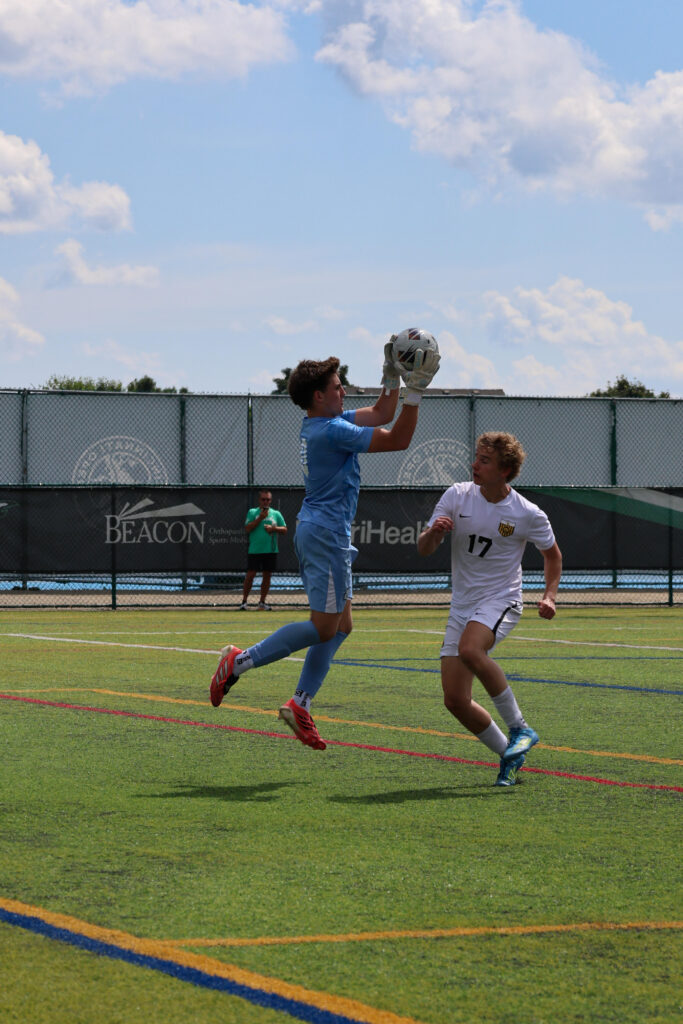
Mason goalkeeper Landen Darling secures the ball as an Upper Arlington opponent stands
nearby, ready for the next play.
Along with the individual pressure goal tending puts on goalies, the unique position makes the sport more personalized. They are the only players who can touch the ball with their hands, and put their body on the line to keep their team in the game. Because they play such an individualized role in the team, they cannot approach the sport in the way that other players would.
“[My role] is definitely different [in practice], because you’re not as with the team,” Krimpenfort said. “I really like [the independence goalies get]. I’ve always lived off [the mindset] if you want something done right, do it yourself, and I feel like having a more independent position I can work on my own things each day.”
For both the girls and boys soccer teams, the goalies are depended on to perform at the highest level and support their team. Along with the pressure the position puts on players to defend consistently every game, Krimpenfort said being in the goal by yourself can make it challenging to connect with the rest of the team.
“It’s harder [socializing with the team] because you definitely do less with them in terms of practices,” Krimpenfort said. “That’s definitely where you build the bonds with your team, but I feel like they’re super understanding of that, and we do so much outside of soccer too which helps.”
Though Krimpenfort said she finds connecting with her team to be harder, she said she still has built strong ties with her teammates. For Darling, the social aspect of soccer has come effortlessly, because he spends a generous amount of time with his teammates off the field. Both goalies said that though the time spent during practices and games can get mundane, the relationships on their team are why they continue to play.
“Building those relationships with my team [makes me want to continue],” Darling said. “You hang with your teammates in classes, in lunch and also on the field. For me [being a goalie] doesn’t make socializing harder at all.”