
Eshal Firoze | The Chronicle
From the rise of club and travel teams to early sports specialization, young athletes have an unprecedented range of choices in the athletic opportunities they pursue. With the increase in opportunities has come an increase in high school selection beyond an athlete’s home district. This shift is pushing the Mason athletic department in their goal to retain Mason talent.
Talent retention in Mason Football
Mason High School (MHS) Varsity football head coach Brian Castner said that he recognizes the need to maintain skilled eighth grade athletes as they enter high school, understanding that it is important to the program’s culture and success. Castner said competing against private and public schools for athletes has grown more challenging as it has become more common for players to transfer for other opportunities and high school coaches to recruit talent.
Castner said that encouraging young players and motivating them to become a part of the high school team and brotherhood is a priority. He said that in recent years, the program has lost around six to eight players to other schools each year, and it is his goal to lower that number.
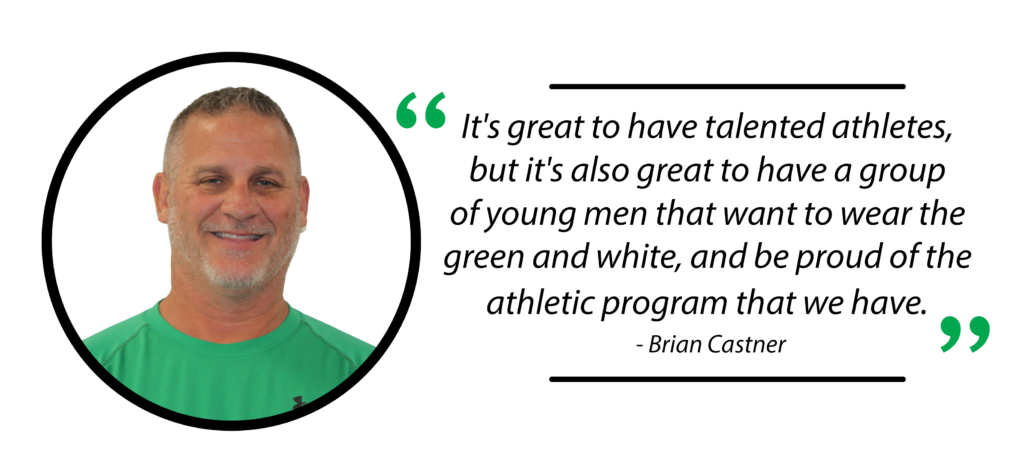
“You have to believe in what you have and in developing everybody,” Castner said. “When you look at the eighth grade class, it’s great to have talented athletes, but it’s also great to have a group of young men that want to wear the green and white and be proud of the athletic program that we have.”
Castner said that many players often do not find the opportunities they believe they are seeking when they leave, which is why he emphasizes showing athletes the benefits of remaining a Comet. He said giving middle school players game-day experiences and showing individuals what the high school team has to offer are essential steps in maintaining young Mason athletes. Castner said that students and parents have higher expectations, making it difficult to maintain athletes.
“We work harder than we really should [have to at] keeping kids,” Castner said. “I also want to do it with the ones that want to be here. I want volunteers, I don’t want hostages. I want guys that want to be a part of what we’re doing because of the passion.”
Efforts across MHS to improve student experience
While Castner has witnessed the transferring effect distinctly in football, MHS athletic director Scott Stemple has seen the long-term growth in athlete choice across many sports. In his 21 years, Stemple said he has watched athletes’ range of possibilities for athletic opportunities widen when entering high school.
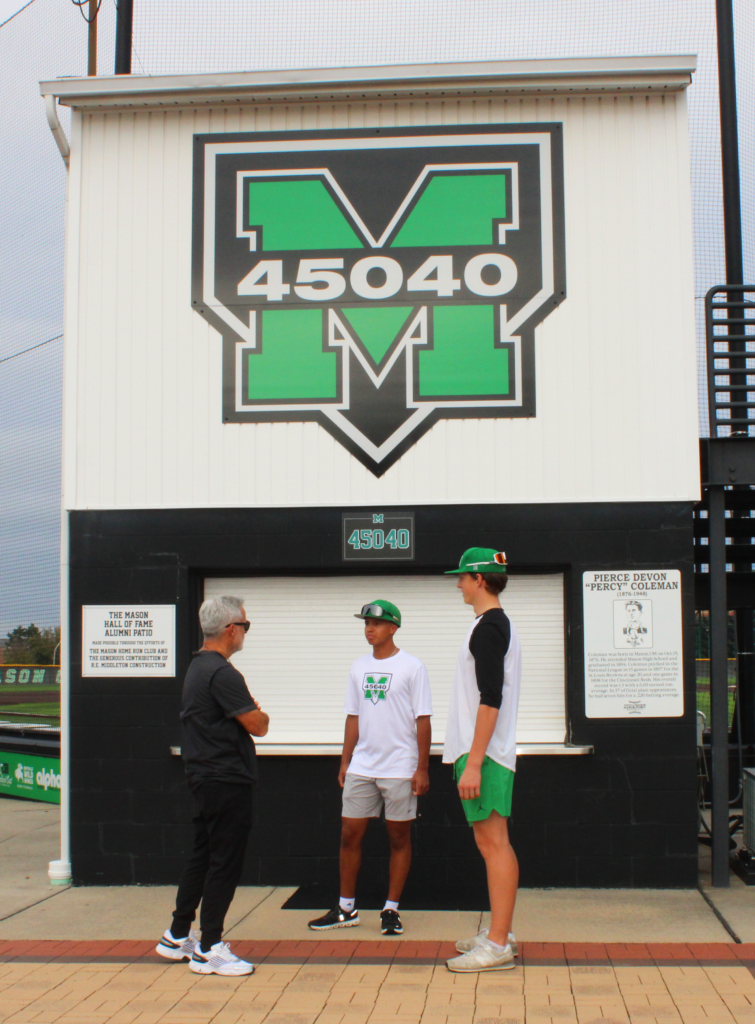
MHS Varsity baseball Head Coach Curt Bly talks to junior shortstop and second baseman
Christian Ramirez (center) and junior pitcher Ollie Stuart (right) before an outdoor workout on
Thursday, October 15. Bly has made 45040 an integral part of the Mason Baseball program’s
culture, representing a connection to Mason and a pride in the program’s roots.
Stemple said that one way MHS works to retain athletes is by placing an emphasis on culture and building strong player-coach relationships. He said that from Mason Middle School (MMS), coaches try to build a consistent philosophy that players can see themselves being a part of when they enter MHS.
“Our coaches have always tried to nurture their programs,” Stemple said. “We talk to [the coaches] about running a program and not running a team. We stress that here at the high school because we think that it is important in terms of kids understanding the culture and the program [they are a part of].”
Stemple said another top priority for MHS is maintaining elite facilities and equipment for student-athletes. He said that from maintaining fields to expanding the MHS strength room, there have been many efforts to further athletes and develop their skills.
“One thing that our school district has always done a great job of is [maintaining] good facilities,” Stemple said. “I don’t think there’s anybody in our league that has a strength room like ours. There are so many students that go through that wellness center [and] the performance center, and that’s what motivates the district to keep those up.”
Stemple said that retaining athletes is important when competing with private schools in athletics. He said he understands that there are several factors that influence a young athlete’s decision to go to a different school, whether it be academics, following family legacy or even socioeconomic factors and affordability in Mason. He said that many young athletes often transfer with goals of finding better opportunities, which is why Mason continues to work to uphold standards and keep talented athletes in the district.
Fostering involvement and culture at the youth level
MMS Athletic Director Jen Mott said she understands the importance of showing kids the available opportunities for Mason athletes. Mott coached volleyball, lacrosse and basketball at both the high school and middle school level before taking on the role of MMS Athletic Director. Through her experience, Mott said she has witnessed the increase in popularity of selecting a high school beyond a student’s home district over the years.
“I have seen the trend of more competition early on [for kids],” Mott said. “When I was a student-athlete, I grew up wanting to play for my school from 7th through 12th grade, and never considered leaving. It’s interesting now to see people having more choice and not as much of a connection to the school.”
Mott said that one strategy the district is using to encourage student athletes to stay at Mason is creating a sense of belonging and purpose for younger students that they can carry into high school. Mott said that one initiative that furthers this goal is the Student Athlete Leadership Team (SALT). SALT is a group of student athletes that work to be learners and grow sports involvement within the student body. Mott said that SALT works to bridge the connection between MMS and MHS athletes, and she believes that initiatives like SALT are important to maintain athletic participation.
“Students can feel like they want a break, or they want a fresh start, and then they realize how limited the opportunities are elsewhere,” Mott said. “It’s important to help students see what they have to offer [to] the community and why it’s worth staying, and [to] recognize the influence they can have on giving future Comets that same experience.”
Like Stemple, Mott said collaborative coaching from seventh grade up to 12th grade in Mason sports works to build an experience that students will come to love and value. She said she hopes that through invested coaches and the relationships students build early, athletes can feel that they find their place in Mason athletics as they make their way toward high school.
MHS Varsity girls basketball Head Coach Gideon Dudgeon said that fostering young athletes from the middle school is important to strengthen the program as a whole and support the team’s future success. Dudgeon said that efforts like youth nights and summer camps allow young athletes to see themselves being a part of a program bigger than themselves.

“Creating a program starts at the youth level,” Dudgeon said. “[We] want kids to feel like they’re part of something from an early age so that they want to stay here in Mason, and then continue on through high school. That’s really where the culture comes from.”
Dudgeon, having coached at the middle school and high school level, said he understands the need to create an environment where athletes can reach their full potential and want to wear green and white for their high school career.
“We want to make sure we provide an opportunity for our best athletes to be successful,” Dudgeon said. “Whether it’s the facilities or schedul[ing] hard games, wherever they can have the opportunity to display their skills, I think will help keep them here.”
A school-wide approach to preserving homegrown talent
MHS Principal Ben Brown has taken a school-wide approach to retaining students through efforts like the MHS Open House, hosted for the second year on November 18. He said he understands that to keep student-athletes at Mason and compete with other schools, Mason must show what opportunities it offers.
“We have won the All Sports Award 19 years in a row in the GMC,” Brown said. “If we kept our own, I think that we would be incrementally better. If you live here in Mason, we want you to go to school here in Mason.”
Brown said retaining homegrown athletes would benefit MHS teams. He said that working to keep athletes will result in a clearer picture of Mason’s true talent.
“My hope [is] that we would be a full representation of who should be here, and then let that play out,” Brown said. “It would be a clearer representation of if you live here, you go to school here, you play sports here.”
Brown said that to compete with other schools, Mason must continue to maintain their strong athletes. He said that it’s important, while competing, that Mason continues to adhere to OHSAA guidelines.
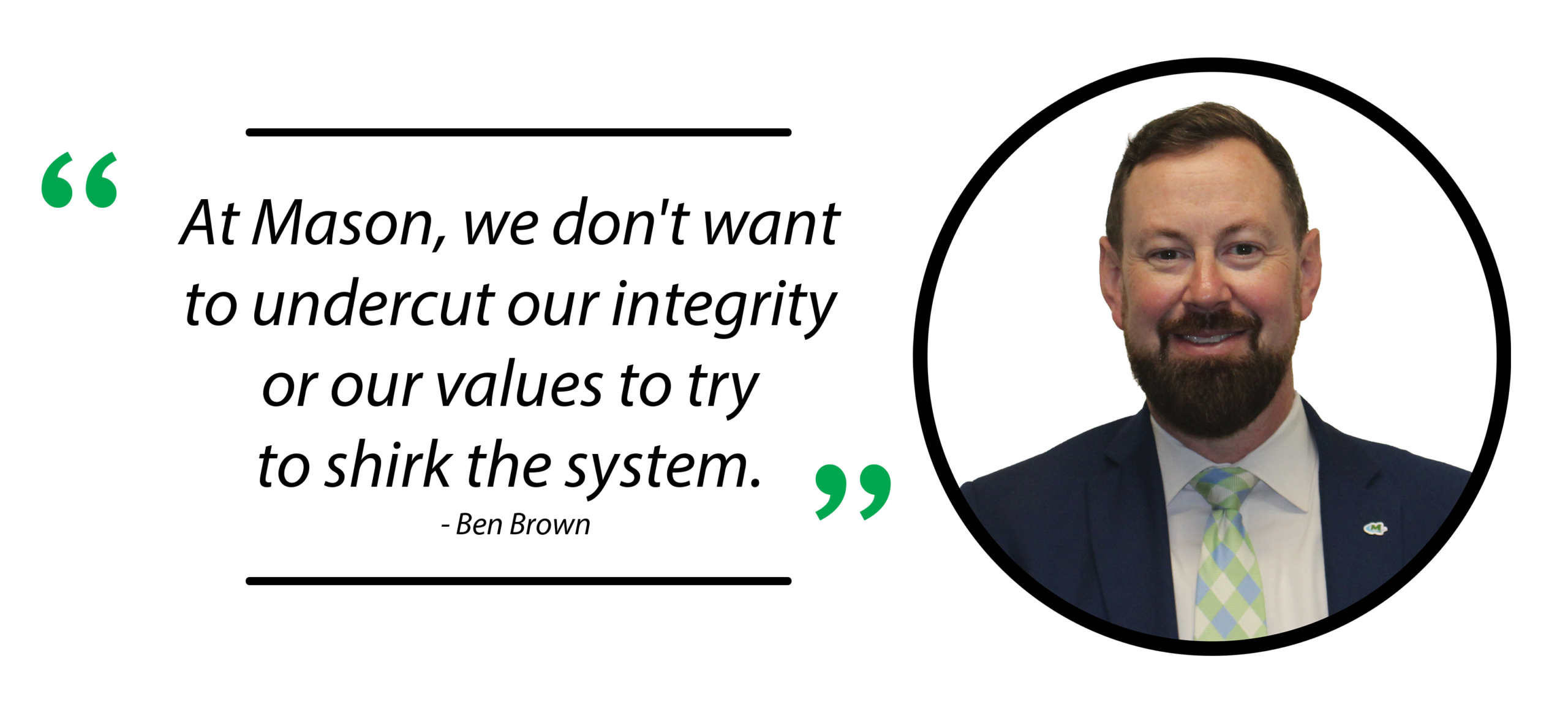
“There’s been a long-time narrative in the playoffs in particular, in certain sports, [asking] should there be separate playoffs for private schools [and] public schools,” Brown said. “There’s a real competitive balance issue even within the GMC because of the open enrollment. I know at Mason, we don’t want to undercut our integrity or our values to try to shirk the system.”
Brown said that the best approach to retain athletes is by showing what is available at Mason. He said that through the students’ experience and teams’ success, athletes will continue to want to be a part of MHS teams. He said ultimately, it comes down to giving athletes reasons to stay.
“If our families live here, I want to give them the best educational experience as well as athletic experience,” Brown said. “We want to keep our own, and we want to just let it play out. If it’s good enough, great. If it’s not, then we have to keep investing in it until it is.”
Retaining athletes through lasting success
MHS Varsity baseball Head Coach Curt Bly has worked to build a successful program and showcase players’ talent for years. Having been the head coach since 2014, Bly came up with the idea of rallying around 45040 to create a sense of pride not only for the players but also for the community.
“The idea of the zip code was not meant to be a shot at private schools,” Bly said. “It’s meant to be something we could rally around and connect with.”
Bly said that athletes have the ability to achieve their goals at MHS when it comes to playing at high levels and finding individual paths to success. He said it is important to focus on current success to showcase for future athletes.
“We work hard every day to be a championship caliber program that not only wins on the field, but wins in ways off the field that our community can be proud of,” Bly said. “You have to attract that next crop of student athletes through what the current crop of student athletes are doing.”
Bly said that it is important to show that players can achieve both academic and athletic goals at MHS. He said he prioritizes maintaining an environment where athletes feel empowered to strengthen both aspects and be successful in their own community.
“The goal was to build a baseball community in which people wanted to be a part of, stay a part of, and invest in,” Bly said. “The zip code is a representation of who we are and loving who we are.”