
Michelle Zuo | The Chronicle
With pop-culture-inspired costumes, character-accurate makeup and detailed props, Halloween serves as the finale to October’s festivities. The holiday has long been an opportunity to dress up and showcase personal interests. But the tradition has evolved into a hobby: cosplay.
As media such as anime, manga and cartoons become increasingly popular, cosplayers have found community through conventions and events. Mason High School (MHS) junior Carly Chang started cosplaying in 2021. Since then, cosplay has become an outlet for self-expression, and Chang has incorporated it into parts of their daily life.
“I feel more like myself when I’m doing cosplay,” Chang said. “[People will] see me in the halls wearing some sort of elaborate clothing. I’m always thinking about
doing something each week because I just like dressing up.”
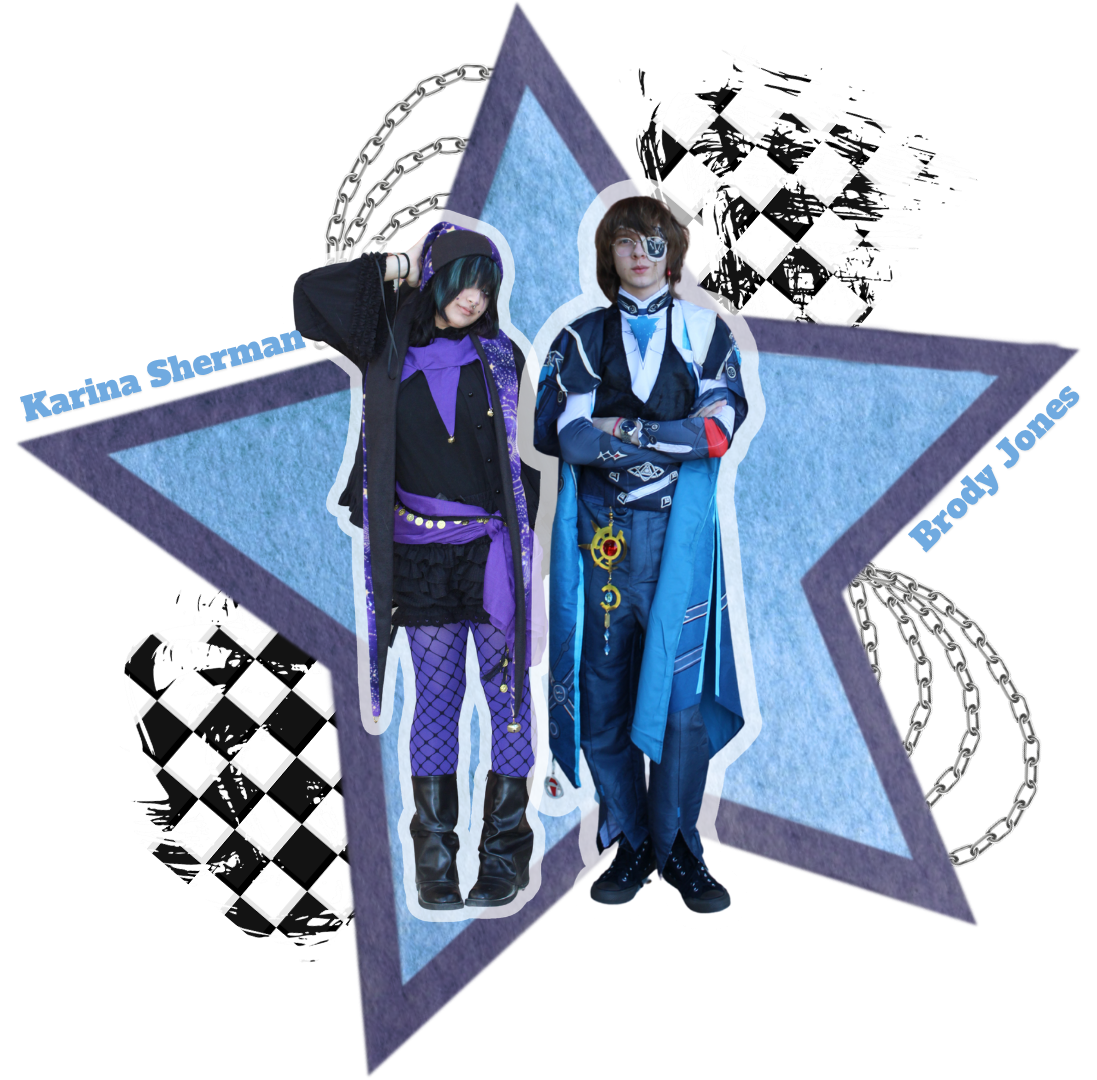
Another aspect of cosplay is the creative freedom it provides. Freshman Karina Sherman was introduced to cosplay in 2020. Since she was young, Sherman said the styling and fashion aspects of the hobby have given her the opportunities to learn new skills.
“I was a little 2020 cosplay baby and it was kind of like throwing together whatever I could,” Sherman said. “Now, I spend a little more money, but a lot of the time I will just use what I have. I’m really into doing design stuff, and I’ve learned how to sew for [cosplay]. I’ve also learned about materials in general [from] pinning stuff together so that it looks normal.”
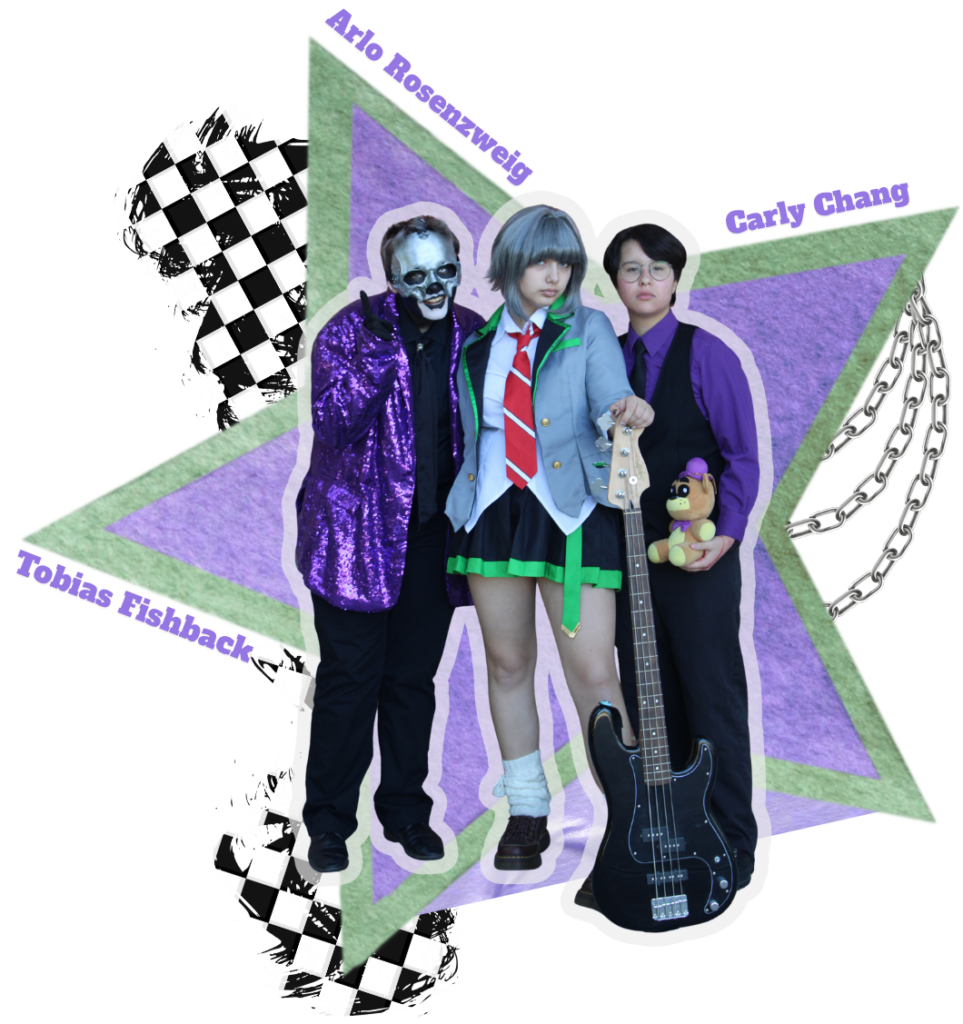
Creating a cosplay can require a variety of skills, from sewing and painting to styling wigs. Junior Arlo Rosenzweig said crimping, styling and altering wigs and clothes have become one of the most enjoyable parts of the process.
“I style each individual spike with a ton of hairspray and it takes forever,” Rosenzweig said. “[But,] I love doing wigs because it’s just so much fun. I also love altering, as I’ll get cosplays and they’re not exactly high quality. So, I’ll paint and stitch them to be the right size and color.”
Cosplayers often purchase cosplay materials from online retailers such as Amazon, Alibaba, Taobao and AliExpress, but the hobby can come with many challenges, including expensive materials and hard-to-find merchandise. Senior Brody Jones began cosplaying a year ago and focuses on Anaxa from “Honkai: Star Rail,” a role-playing gacha game. Jones said focusing on one character can help make the cost of cosplay more manageable.
“In the next convention my friend and I [are going] to, we both want to try a new character because we reuse cosplays a lot,” Jones said. “The great thing about it is that [I am] able to reuse them and get [my] money’s worth out of them.”
Although cosplaying is often associated with anime, students also create costumes based on shows, movies, music and games. For many, one of the most creative aspects of the hobby is the connection it creates between people and characters. Rosenzweig said she mainly cosplays Shiho Hinomori from “Project SEKAI,” a rhythm and story-based mobile game. Rosenzweig said one character allows her to express aspects of both the character’s personality and her own.
“My personality is very different from [Shiho Hinomori] in the way that she’s very introverted and I’m very extroverted,” Rosenzweig said. “[But,] I think overall I have a pretty similar personality to her. Like [how] she’s an awkward character, but she loves and cares about her friends. When I’m dressing up, I prefer to be myself because I’m giving that character embodiment and I get to show different aspects of my personality.”
However, others like Chang discover creativity and connection through cosplaying multiple characters from different media as well as their own original characters. Chang said cosplaying certain characters without established designs allows for more creative freedom. The character connection cosplay provides has also introduced Chang to a potential career path.
“I like going into different universes and diving into worlds that other people have created,” Chang said. “I like interacting with those worlds when I read and watch shows. Even as I’m dressing up as someone or something else, I really connect with the characters, and I want to go into a field where I make characters for others to connect with.”
Rosenzweig focuses on cosplaying one character rather than multiple. Rosenzweig said that she stays with the original looks and actions because of her deep connection and respect for the character.
“I’m scared that if I do something that isn’t canon then I’m ruining her image in my own eyes,” Rosenzweig said. “Her voice actress is a real person and is pretty involved with the fans. So if I’m giving her a bad image, what does that make her voice actress or production team feel? Hypothetically, if she were a real person, I wouldn’t want to destroy the image she’s built up.”
Portraying characters can also lead students towards future interests. Sophomore Tobias Fishback cosplays characters from horror films and theatrical bands, which he said has allowed him to discover parts of his passion for filmmaking and acting.
“I want to pursue filmmaking and acting, so [cosplay] plays a part in that [because] I like the idea of just pretending to be a character,” Fishback said. “[Cosplayers] get to embody that character [they] love so deeply, and I’m neurodivergent [and certain] bands are my special interest. Cosplaying for me brings out a lot of joy, artisticness and connection on different levels in a different kind of space.”
At conventions, events and online, community is another aspect of cosplay that students find comforting. Jones said the accepting environment drew him further into the hobby.
“It was really surprising to see how accepting and open the community was in my first time cosplaying,” Jones said. “I met a cosplayer who was extremely experienced, and I could tell by her cosplay price and quality alone. But she was very kind and showed me a lot of hidden things about cosplaying that make it easier and more fun.”
Jones said that like any community, cosplay has aspects that can drive people away from it. With uncomfortable situations occurring online and at conventions, Fishback said these portions of the community can be a challenge for cosplayers.
“It’s not representative of the community but things do happen,” Fishback said. “You honestly have to get away from the situation and ignore it in the best way possible. [It’s] not ignoring that it [happened,] but don’t let it get to you if it doesn’t affect you personally.”
Sherman said parts of the cosplay community are often misunderstood. She said that being involved in cosplay has changed the way she sees cosplaying.
“Half the people who go to these conventions are just people who like arts and crafts,” Sherman said. “A lot of convention-goers that I meet are just teenage girls dressing up because where else do you get to wear colored wigs and very eccentric outfits? I see people [cosplayers] as more normal now [and] everyone’s there to just be friends.”
The welcoming environment of cosplay has also allowed the community to express themselves in different ways. Rosenzweig said she’s seen how, in both her own personal experience with ADHD (Attention Deficit Hyperactivity Disorder) and in the community, cosplay provides a place for those facing struggles to come together.
“I had one of the worst experiences of my life and I kind of just spiralled,” Rosenzweig said. “I started spending hours on [Project SEKAI] and got to unlock more stories. As I read more about the characters, I became emotionally attached, and now [they’re like] comfort [to me]. It’s not something to generalize, but people who have mental differences or disabilities typically feel accepted in these communities because everyone’s got that kind of weirdness to them.”
In addition to providing an open space, cosplay allows people to find enjoyment in becoming something or someone else without involving their real identities. Fishback said this is one of the main reasons why he is drawn to the hobby.
“It’s so easy for me to have that concealment of not having to worry about embarrassing myself,” Fishback said. “Especially with cosplaying my main character, he wears a mask and makeup so nobody will know what my face looks like or remember it. I have bad anxiety, and it just allows me to have fun without worrying about anything.”
Fishback said cosplay is a hobby that takes time to develop and that starting with the basics can make the process less intimidating. Especially when starting, Fishback said that his biggest recommendation is using events such as Halloween as an opportunity to start without worrying about having a perfect costume.
“It’s important not to expect [a] cosplay to be 100% perfect on the day it ‘debuts,’” Fishback said. “When I first cosplayed, my cosplay wasn’t done, and I didn’t have a mask or any hair for the character, but I was able to thrift and collect more items at concerts. [It’s important to] get a base first and have a starting position [without] nitpicking about the little things.”
With cosplay often centered around animated media, Fishback said he faces additional challenges when cosplaying characters from theatrical bands, music and horror films because they are less represented in the main community.
“Music has a big impact on my life,” Fishback said. “It’s how I regulate myself when I’m nervous, and most of my cosplays are music or horror-related. So it sucks being someone who doesn’t really like anime [since] cosplay is [already] going against social norms, and when you make norms for that community, there’s this little fraction of people who are pushed out because they’re not doing what the rest [of the community] is doing.”
Fishback attends mainstream anime conventions such as AnimeOhio with his friends while also attending horror and music conventions. He said that going to both types of conventions has given him different experiences and appreciation for the hobby.
“It’s just so cool to see how deeply your friends care about [cosplaying] and I love being able to hang out with them,” Fishback said. “I felt a deep sense of being left out [at AnimeOhio] but I got to be around my friends with their happiness. I also love being able to see people be together and artists com[ing] together.”
Rosenzweig started cosplaying in 2021. Despite having prior experience in the community, Rosenzweig said dressing up has given her a new perspective on the effort behind the hobby.
“When [someone] sees pictures of cosplayers, [they] don’t think about the hours that go into the wig or the hundreds of dollars that go into the costume,” Rosenzweig said. “When you cosplay, you get to see that and recognize it. [Then] you can talk to other cosplayers about it, and you can see them light up [because] they get so excited that someone acknowledges their efforts.”
Sherman said the cosplay community has provided her with a welcoming space to learn and start conversations with new people. She said that this has changed the way she approaches conventions and interacts with others.
“I feel like a friendlier person and I want to talk to all these people who have made a lot of their own stuff,” Sherman said. “I’ve learned how to be kinder to people in general and that I can spark a conversation. You just [have] to be out there, make friends within [the community] and it becomes more fun.”
Chang said some may find the hobby to be daunting because of social expectations from both inside and outside of the community. She said that overcoming this can start with small steps, whether it’s dressing up on your own or finding community online.
“No matter what you do, there’s always going to be people who call you weird,” Chang said. “If you like it, it doesn’t matter if no one else does because it’s for you and not anyone else. [So] you might as well make what you’re doing something you enjoy [and just] go for it.”