Lippy Pullen | The Chronicle
For many high school athletes, the goal is to keep playing at the next level. At Mason High School (MHS), the pathway for reaching that goal is changing, as growing numbers of senior baseball players are choosing to ditch the status quo and commit to community or junior colleges rather than traditional four-year programs. These athletes are prioritizing immediate playing time and roster flexibility, with the two-year route becoming a strategic path to their goals of transferring to Division I or Division II programs.
Nationally, high school baseball recruiting is no longer what it used to be, and players and coaches at MHS are following the new trend. With the rise of the National Collegiate Athletic Association (NCAA) Transfer Portal and issues with the Name Image Likeness (NIL) deals, athletes are increasingly choosing junior college and community college. What used to be minimized to an easy way to continue a baseball career is now the smart and intentional next step forward.
MHS baseball head coach Curt Bly has been coaching at MHS for the past 28 years and has been the varsity coach since 2014. Under his leadership, the Comets have taken four runs at the state tournament, finally taking home an Ohio High School Athletic Association (OHSAA) Division I State Championship title in 2024.
“Junior college is definitely becoming a more, not just desirable route, but a necessary one for Division I caliber players,” Bly said. “A lot of Division I programs are recruiting through the portal more than they are recruiting high school athletes”.
Because of that shift, players are thinking more about their long-term goals than about where they will go right after high school. Junior colleges (JUCO) offer opportunities to improve and gain experience, allowing athletes to be recruited later in their careers as stronger players. It also gives athletes more flexibility in a system that is becoming harder to break into right away. For most high school baseball players who desire professional careers, this pathway is about setting themselves up for a more successful future.
Senior catcher Hudson Groppe signed to play baseball at Cuyahoga Community College in Cleveland, Ohio, on Feb. 4, 2026. As a new student at MHS for the spring 2026 season, his first as a Comet, Groppe spent the earlier part of his high school career at Sycamore High School.
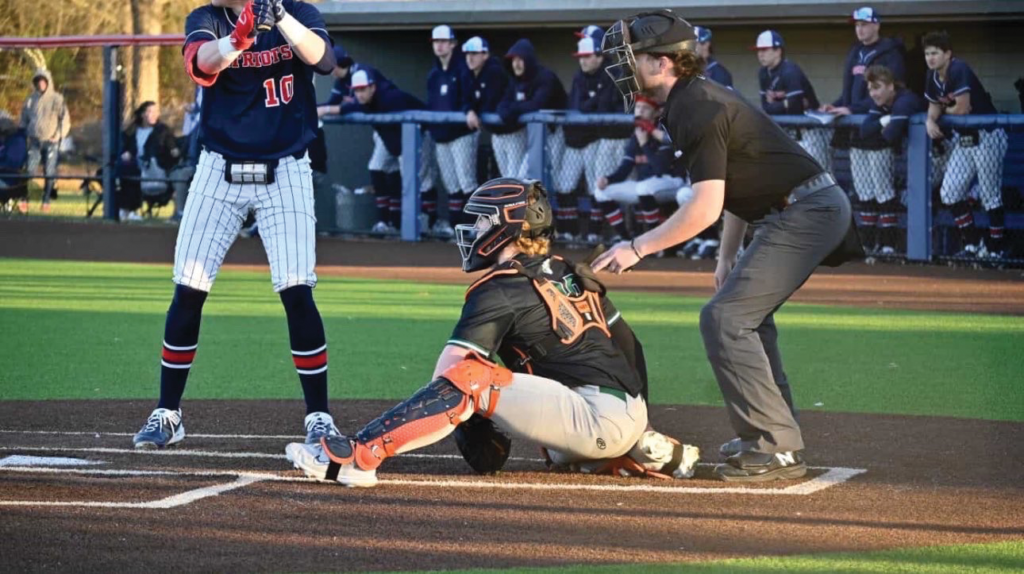
2025 MHS graduate JJ Darst is a catcher at Lincoln Trail College in Robinson, Illinois, and will be joined by current MHS seniors Liam Sanders and Sam Davies next year.
“I had a few Division II offers and a couple of Division III [going into the summer], but it really was not [progressing],” Groppe said. “So, I felt that junior college was the smartest route for [me].”
Groppe’s experience shows how competitive the recruitment process has become. Most players are realizing that the Junior College route gives them another chance to prove themselves. Instead of committing to a college that will not be the best fit, with a lack of playing time and chances to grow, they are choosing a path that keeps opportunities open.
“You get film, get highlights, and send them out to coaches, just putting your name out there and talking to coaches,” Groppe said.
That level of independence is a part of what makes the Junior College route more appealing. Players have more control over their recruitment and can work to improve their recruitment portfolio at the collegiate level.
On Oct. 28, 2025, MHS senior pitcher and outfielder Liam Sander committed to Lincoln Trail College in Robinson, Illinois, taking a similar approach to Groppe, with goals to continue at the Division I level later in his career. In the Spring 2025 season, Sander had a batting average of .264 and a collective Runs Batted In (RBI) of 14.
“I chose a Junior College because my goal is to play Division I, and the best way for a high school player to go DI directly without going there is by going to a JUCO,” Sander said. “It is very hard to get there nowadays with the transfer portal and the roster sizes of college programs.”
Sanders’ decision reflects the growing sentiment among players, a belief that development matters more than immediate placement. College programs are looking for athletes who are already ready for the higher level of play, and Junior Colleges give these players time to reach that level. Instead of being overlooked out of high school, they can come back stronger and more prepared for the college level.
“It is way more practical for college teams to recruit a 20-21 year old with two years of college experience than an 18 year old fresh off of their senior year of high school,” Sander said.
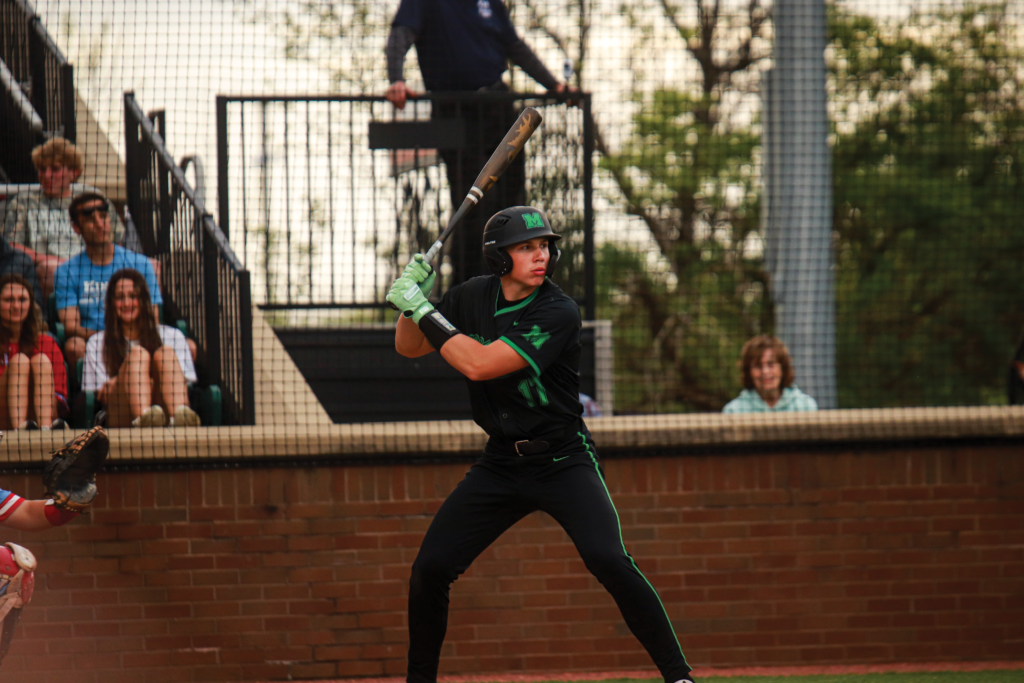
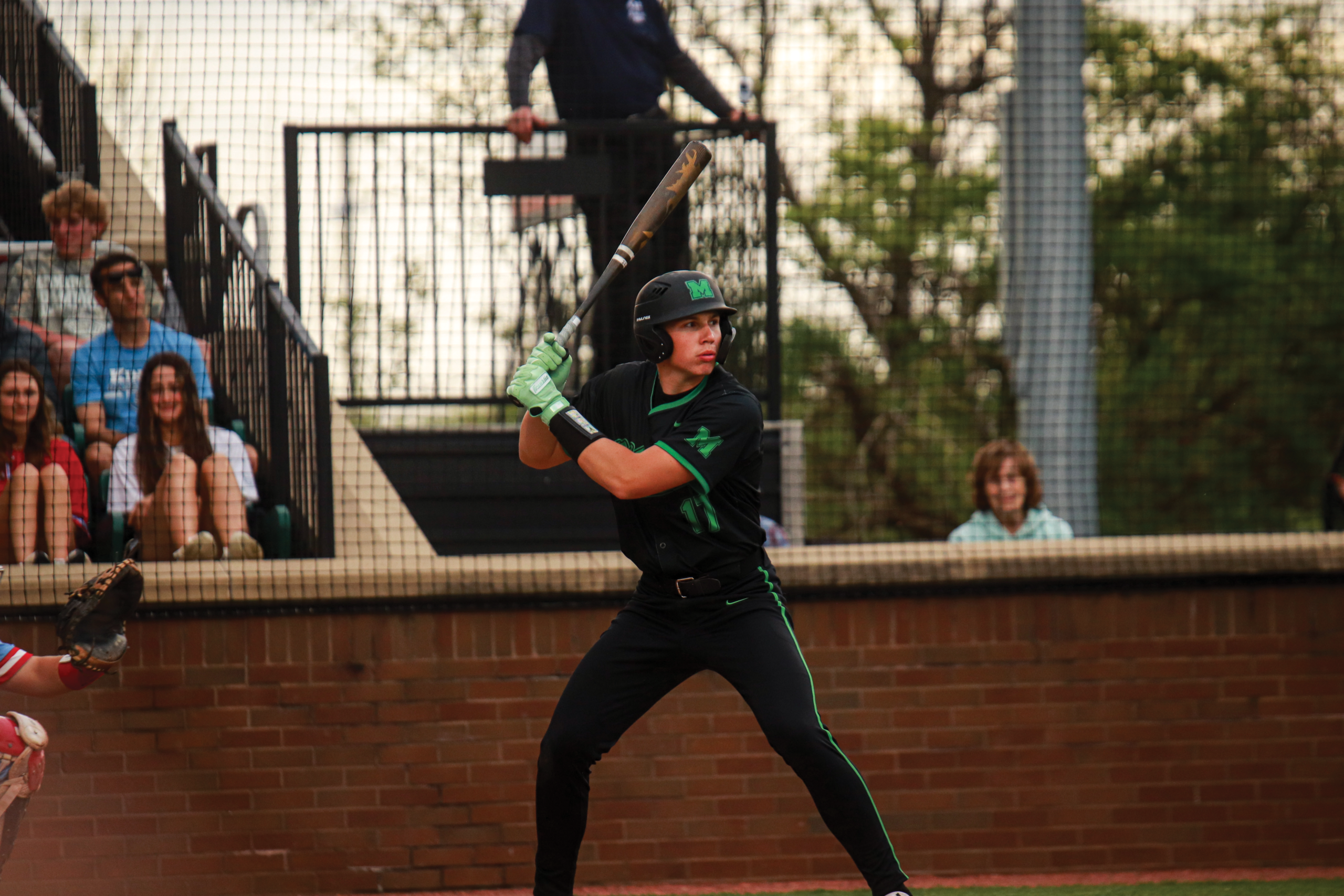
Senior Liam Sander prepares to bat during the Comets’ 9-6 win at Prasco Park against the Kings Knights on April 19, 2025
2025 MHS graduate JJ Darst, who is currently playing baseball at Lincoln Trail College, has seen his own development at the JUCO level. Darst committed to Lincoln Trail with the goal to transfer after his two years are over, and enter the NCAA Transfer Portal.
“[Being at Lincoln Trail] has definitely opened my eyes to new Division I opportunities, and I am really looking into schools that I never considered out of high school,” Darst said.
The increased exposure of playing at the Junior College level is one of the biggest advantages of taking that route, as players are able to consistently play, build their film portfolio and attract attention from programs they may not have reached as a high school player.
“You are actually getting on the field most of the time,” Darst said. “The main point of a JUCO is to get the players’ exposure and the opportunity to move on and play somewhere else after their 2 years are up. We do not want our last game to be played at our JUCO.”
The rise of the JUCO and community college route reflects a broader shift in how high school baseball players approach their futures. Instead of focusing on immediate offers, athletes are learning to prioritize development and playing time to prepare themselves for higher-level opportunities. More players choosing this route rather than immediate Division I, II, or III commitment is changing the perception of college baseball. What was seen as the alternative plan is now becoming the standard way to be recruited.
Head Coach Curt Bly has been guiding the athletes on their continuation and college careers, emphasizing his role as a guide to help them make the best decisions based on their skill level and playing maturity. Bly said that it is important for his players to explore all their college options and evaluate which will be the most successful choice for them.
“[JUCO and community colleges] are really changing the landscape of college athletics in general,” Bly said. “Particularly in baseball, [this sport is] not just forcing this route, but making it one that is actually a really good approach.”