Aditi Varman | The Chronicle
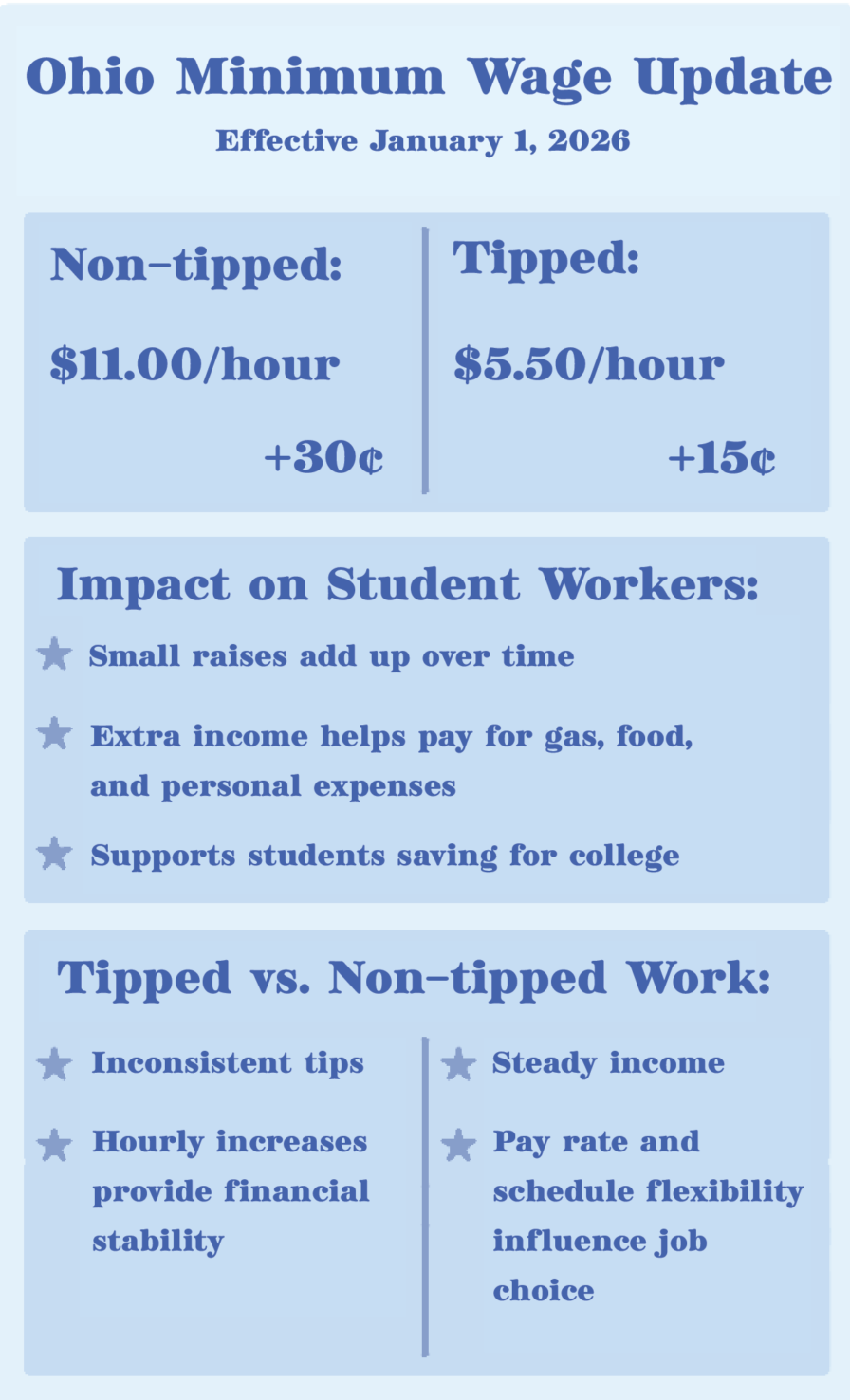
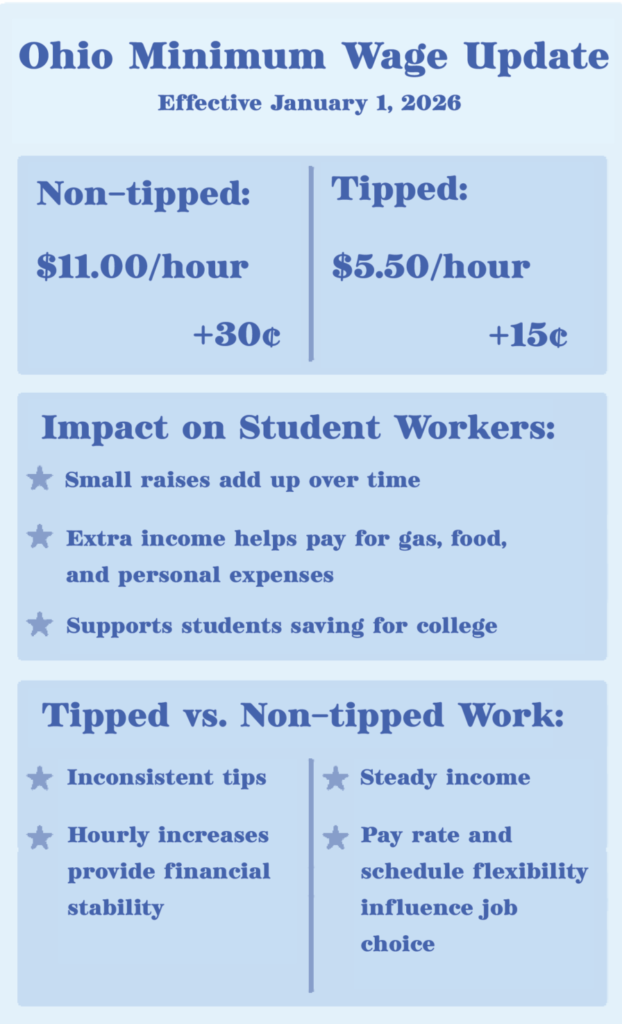
Effective Jan. 1, 2026, the Ohio Department of Commerce (DOC) announced that Ohio’s minimum wage increased to $11 per hour for non-tipped employees and $5.50 per hour for tipped employees. This marks a 30-cent increase for non-tipped workers and a 15-cent increase for tipped workers, part of the state’s annual inflation-based adjustment.
For many Mason High School (MHS) students who balance school with part-time jobs, the increase brings both relief and mixed expectations about its impact.
MHS Junior Emmerson Reynolds works part-time at Target, and said that even though the raise may seem small at first glance, it carries significance for student workers. For many teens, minor changes in pay can affect how they manage their time and finances.
“Even a small increase helps,” Reynolds said. “When you’re working after school and on weekends, those extra cents per hour add up, especially when you’re saving for college or paying for personal expenses.”
Reynolds said that the impact of raises usually become more noticeable when viewed over weeks or months rather than a single paycheck. She said students who work consistently often feel the pressure of covering their own costs.
“When you look at it long-term, it’s probably more helpful than people think,” Reynolds said. “Basic necessities cost a lot more now, so any increase matters.”
Reynolds also said that the increase affects more than just numbers on a paycheck. She explained that balancing work, school, and personal life can be exhausting for students.
“After a full day of classes, going straight to work can be a lot,” Reynolds said. “Knowing that I am earning more makes those late shifts feel a little more worth it.”
In addition to managing long hours, Reynolds said earning her own income has helped her become more independent. This wage incline supports students who are trying to take financial responsibility in their own lives.
“I like being able to pay for my own things without always asking my parents,” Reynolds said. “The raise helps me feel more independent and responsible, especially while I’m getting closer to graduating and [being] on my own.
According to the official Ohio Department of Commerce website, a tipped employee is defined as someone who receives over thirty dollars in “tips,” or payments not made by their employer. This covers people like food and beverage servers, hospitality specialists, personal services like cosmetology and so much more.
Similar to Reynolds, many students at MHS clock in regularly to earn a living wage, but not everyone works in retail. There are thousands of high school students all over the country who spend their time in restaurants as servers- tipped employees. They too are affected by the wage increase, though differently than the students who work with a steady pay.
Nana Boateng, a Senior at MHS, spends her spare hours working part time at Whiskey Yard. Botang said the recent wage increase has already begun to make her schedule and budget feel more manageable.
“It’s nice to have a little extra in my paycheck,” Boateng said. “Honestly, anything is helpful when I’m spending money on food and gas while also trying to save up for college.”
Boateng said her perspective on wages was shaped in part by her recent experience searching for a job before being hired at Whiskey Yard. Going through applications and interviews made her more aware of what she looks for in an employer. She said pay and scheduling flexibility stood out as key factors during the process.
“When I was looking for a job, I definitely paid attention to the pay rate and how flexible the schedule is,” Boateng said. “If an employer is willing to pay fairly, it shows they respect the time and effort their employees are putting in.”
Boateng said for students in tipped positions, the adjustment brings more security. Tipped workers often rely heavily on customer behavior, which can make income unpredictable despite hourly increases.
“Some nights are great, but other times you can’t really count on tips,” Boateng said. “That’s why even a small hourly raise makes a difference when tips aren’t guaranteed.”
Boateng said she hopes that the recent raise is only the start of continued support for minimum wage workers. She said that rising wages are important for students who are learning to manage their own finances.
“I think it’s important that wages keep rising as the cost of living goes up,” she said. “I hope the government continues to pay attention to workers and continues to fairly compensate us.”
While she appreciates the adjustment, Boateng said there is still room for improvement. Even though the raise helps with immediate expenses, students still face the challenges of saving enough long-term. Many part-time jobs for high schoolers don’t provide enough to feel truly secure, and every extra bit of support can make a difference.
“It’s definitely helping, but there’s always more that can be done to make part-time jobs sustainable for students,” she said. “Even small steps in the right direction make a difference and show that the work we do is valued.”