
Evelyn Feldmann | The Chronicle
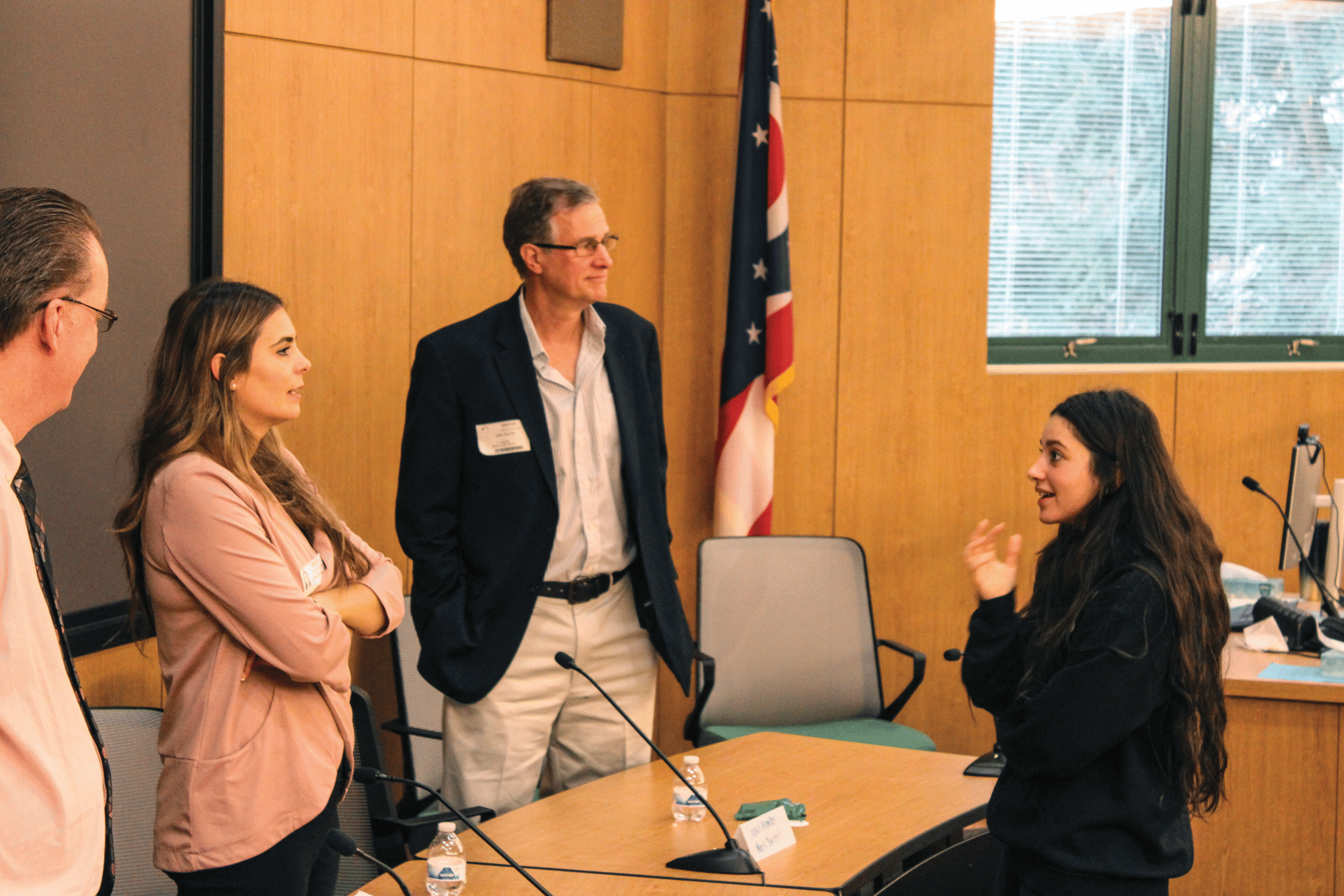
On October 21, three City of Mason officials sat down with 10 Mason High School (MHS) students at the Seat at the Table event during Connect Time in the Harvard Room, coming together for a discussion about local government and youth involvement in the Mason community.
The event was organized by the Experiential Learning Program (XLP), which aims to connect students with real-world learning opportunities. During the discussion, students were given the chance to ask questions about city operations and share their perspectives with local officials.
Mason City Council member Mark Burrell was one of the three officials who attended Seat at the Table. He said it was wonderful to hear and answer students’ questions and perspectives, which differed greatly from what adults asked at previous Seat at the Tables and similar events.
“We heard some interesting points of view from students that I know I hadn’t heard before,” Burrell said. “The one thing that I always enjoy is hearing different people’s [stories], and I think it’s great if you can have events where [that is possible].”
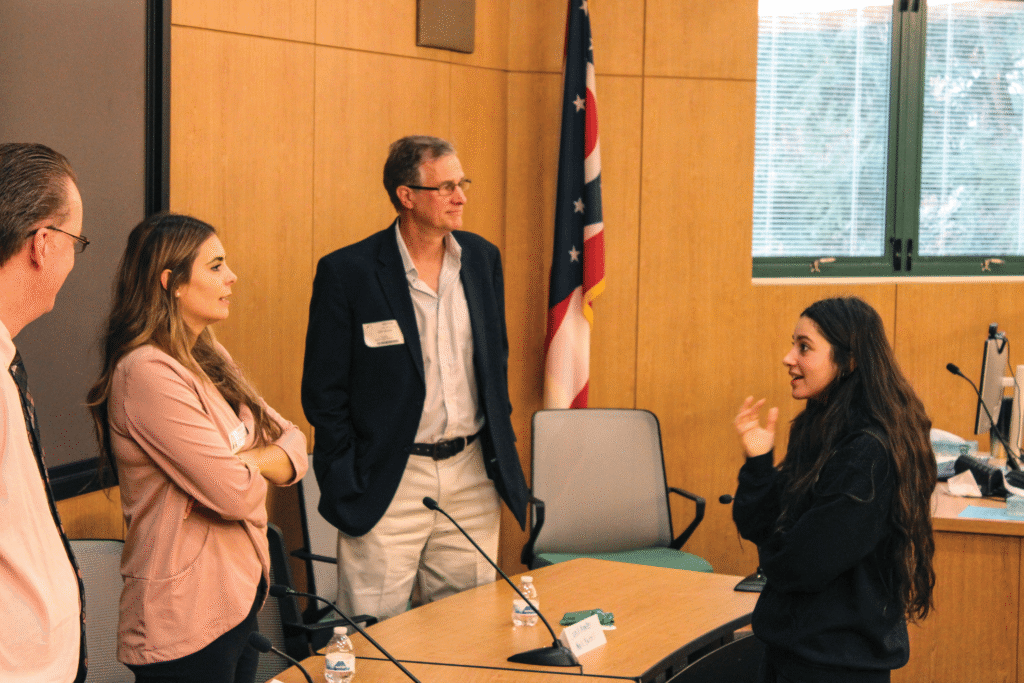
Similar to Burrell, City of Mason Manager Mark Hansen said he also noticed differences between the students’ questions and those he typically hears from adults. He said students were interested in understanding the limits and processes of local government rather than questioning why officials had not taken certain actions.
“There are a lot of really academic, fundamental questions [the students] asked here,” Hansen said. “Like, ‘What can you guys not do?’ That’s a great question that we never get asked. The adults [would] say, ‘Why aren’t you doing it?’”
For students, the discussion offered an opportunity to learn about the government responsible for their community. Junior Victoria Villameriel is a new Mason student, having moved from Texas over the summer. She said she attended to see what the leadership of her new city looks like.
“I had basically no context for how [government and political] things were working [here], and now I have a lot more,” Villameriel said. “I have [felt] a lot more empowered to try and get more involved [in local government].”
Villameriel also appreciated the opportunity to connect with local leaders as she adjusted to a new school and community. She said the event made her feel welcomed and encouraged her to become more active in the Mason community.
“I really am glad that I got this opportunity to feel the community was reaching out to us,” Villameriel said. “That makes me feel valued as a community member and not like I’m just some random stranger who came from Texas. I’m really grateful for that.”
Senior and Model United Nations member Jumana Ahmed said the focus on youth outreach allowed students to discuss issues that directly affect them as they take on more responsibilities. She said local government can be an accessible starting point for students who find politics overwhelming.
“We’re only beginning to be impacted or realize more about how society functions and how it impacts us,” Ahmed said. “We’ve started driving, so now we’re affected by construction. You [might] get a job, so you’re impacted by whatever the minimum wage is [and the] cost of living if you choose to start buying some of your own things.”
Ahmed said local issues can be easier for students to understand than national or international political developments. She said events such as Seat at the Table allow students to learn about government through issues affecting their local community.
“Politics is the one thing that is always so relevant to our society, but it is the one thing that is always changing,” Ahmed said. “So it’s hard to keep up with it. Seeing politicians, governors or people who work for the city talk about our city and our population, it’s easier to wrap your head around than some worldwide event.”
Although students found value in the discussion, Villameriel said the number of attendees limited the range of perspectives represented. There were 120 people at the event, and Villameriel said a larger group could have led to more questions and a broader discussion.
“It would have been [better] if there had been more people to ask questions,” Villameriel said. “I felt like we were kind of limited in scope just because of the number of people that were there, but I do think it went well.”
Beyond the discussion itself, the event also provided an opportunity to strengthen the relationship between students and city officials. Burrell said participants discussed ways to connect the MHS Student Government with the City Council, including inviting student government members to meetings and giving them opportunities to read resolutions.
“I was delighted to hear about the student council interactions with the city,” Burrell said. “We’ve come out of this with some actionable things that will help strengthen that connection because they are the future of Mason.”
The conversation also helped students better understand local government’s role in their daily lives. Jenna Pantling, assistant to the city manager and community events coordinator for the City of Mason, said municipal government addresses concerns such as public safety, transportation and quality of life that impact students every day.
“Everybody [cares] about safety,” Pantling said. “Everybody cares about getting people to where they need to be and everybody cares about a strong quality of life. That’s the beauty of local government that isn’t necessarily found in levels of government higher up.”
To encourage more students to participate in future events, city officials are considering ways to improve communication with younger residents. Pantling said feedback from the discussion highlighted the importance of using platforms students regularly access to share information about city projects and opportunities for involvement.
“I think there was a lot of valuable feedback [on] how [we can] utilize different communication tools,” Pantling said. “[Instagram] seems to be something that the younger generation is using more, [so we can use it] to let them know about current issues or current projects and initiatives happening, so they can get involved and attend.”
Ahmed said civic involvement is important because government decisions can affect people’s lives, even if they do not actively follow politics. She said students should recognize how public policies can affect their financial circumstances and future opportunities.
“There may come a time [when] you are affected by what’s going on,” Ahmed said. “Whatever issue arises: if your life doesn’t go as planned as prices climb higher, as more people struggle to make a living. For some people, politics is [viewed as] a secondary thing, but it shouldn’t be a secondary thing because it has the ability to change [lives].”
Villameriel said students do not need extensive experience to begin participating in local government. Having previously served as an officer in her school’s Amnesty International Club, she encouraged students to start by learning about local issues and discussing them with others.
“It’s usually just baby steps,” Villameriel said. “Just little things like livestreaming the city council [meetings], finding what’s important to you [or] talking about it with your friends, saying, ‘Hey, I think this or that’, and then eventually you are helping make change you’d like to see in your government.”
Villameriel said students should also recognize they do not have to navigate civic involvement alone. She encouraged young people to share their perspectives and realize the value of their contributions to their communities.
“Nobody’s an island,” Villameriel said. “Everyone operates within the system, within a community, within a world. I just think everyone should at least try to [get involved with] a little bit of [government]. I think it should be normal. You are valuable. Your voice is important, and your voice deserves to be heard.”