
Mason students, staff unite to defend identity and history amidst shifting national policies
Sololiya Ebba | Managing Editor | The Chronicle
History, by simple definition, records the people, events and ideas that have shaped society over time. The way those histories are taught and preserved plays a pivotal role in how individuals understand and interact with the world around them.
In 1926, Carter G. Woodson, a scholar dedicated to celebrating the historic accomplishments of Black people, launched Black History Week in the second week of February to coincide with the birthdays of Abraham Lincoln and Frederick Douglass. Fifty years later, this observance turned into Black History Month, earning national recognition as a time to reflect on the history, influence and ongoing contributions of Black people and their communities. This February marks the 100th anniversary of Black History Month. This century milestone arrives at a time when educators and students continue to debate how history is taught and how the past informs present-day conversations about identity and belonging in America.
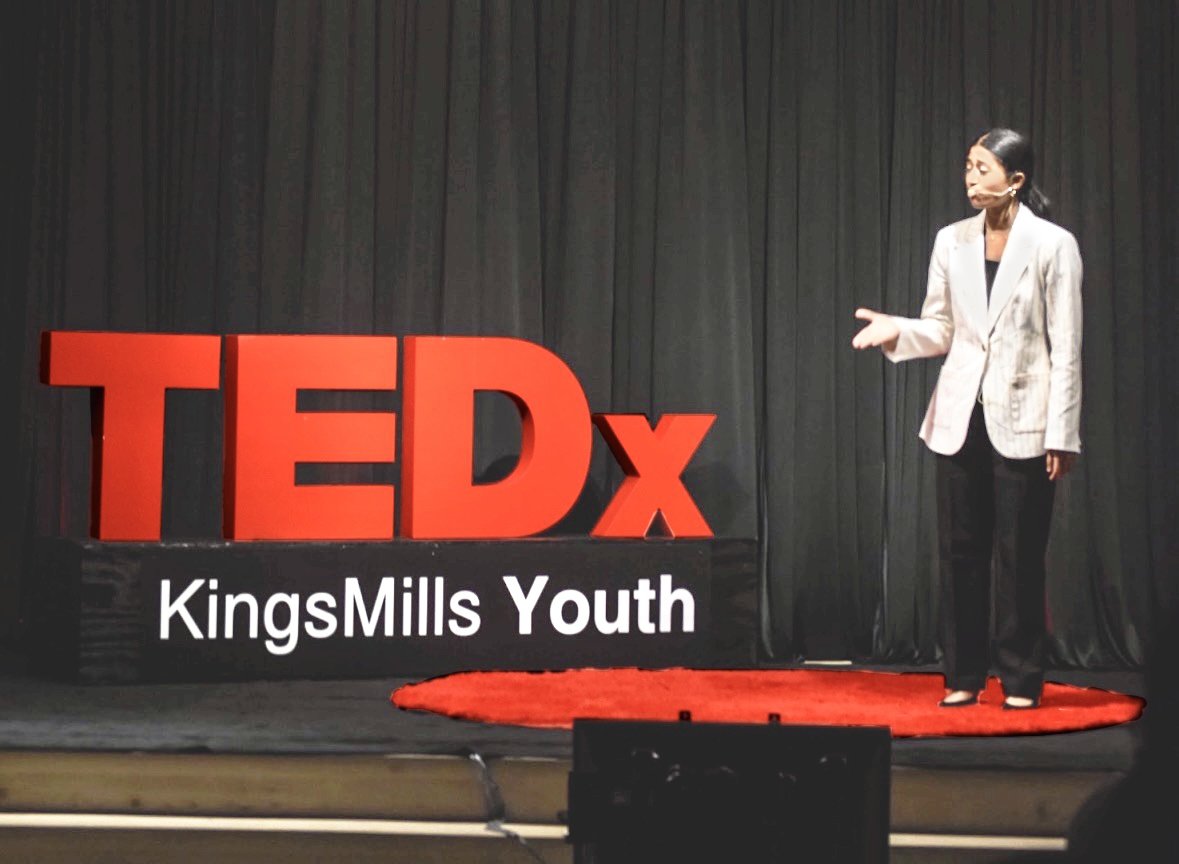
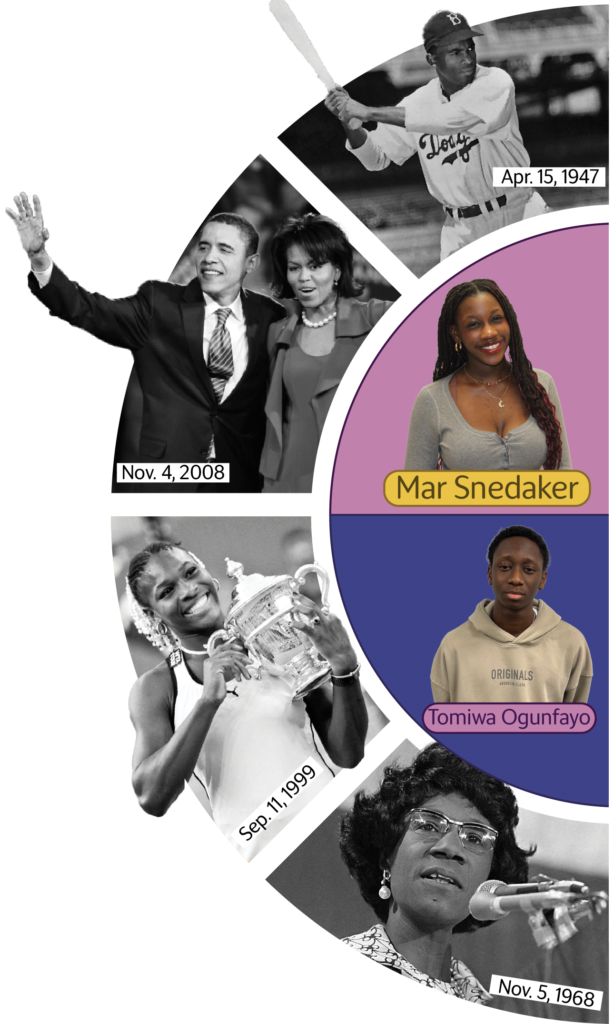
Mason High School (MHS) senior Mar Snedaker is the first in her family to be born into American citizenship, as her parents immigrated to the United States from Uganda before she was born. Living in a community that is 43.5 percent white for most of her life, she is familiar with being the first or only Black girl in many spaces. Just last spring, she was recognized for her role as Persephone in Mason Drama Club’s Hadestown, as the first Black female lead in a MHS musical. As a Black student and a child of immigrants, Snedaker said that her unique perspective has shaped how she understands identity.
“I wish that more people understood that [Black people] are not a monolith,” Snedaker said. “Very often, when people think of Black students, they think of a very specific stereotype, and it is harmful. Even my identity gets misunderstood sometimes, because being African American can mean different things depending on [your background].”
Recently, immigration enforcement actions by the United States government have drawn national attention. During the 2024 presidential campaign, President Donald Trump ran on a promise that he would crack down on immigration in the United States, and he quickly followed up on this promise by declaring a national emergency on Jan. 20, 2025, in an attempt to secure the U.S. southern border. Since then, the U.S. Immigration and Customs Enforcement (ICE) has facilitated 622,000 deportations, 1.9 million self-deportations and revoked over 8,000 student visas, according to Public Broadcasting Service (PBS) News. As families are separated, citizen outrage has boiled over, particularly following ICE operations in Minnesota, where reports of students being detained near schools and fatal encounters involving U.S. citizens sparked debate over federal accountability and immigration policy. For students with immigrant backgrounds, such as Snedaker, these headlines have brought national policy close to home.
“It feels like we are taking steps backward,” Snedaker said. “A lot of people, when they immigrate or seek asylum, want to come to America, because America prides itself on [the idea of] freedom and justice for all. When you take that away, not only do you not give people the chance to be a part of the country, you erase the foundation this nation was built on.”
Rather than remaining silent, Snedaker decided to take a stand. On Thursday, Jan. 29, she decided to message her close friend, MHS senior Emori Witmer-Gautsch, and ask if she would be participating in the viral National Shutdown against ICE that would be happening the following day. Participants were encouraged by the message, “NO WORK. NO SCHOOL. NO SHOPPING.” Snedaker and Witmer-Gautsch decided to take the ideals of the nationwide strike and find a way to make an impact in their own community. Within a couple of hours, they created an Instagram account, spread the word to their friends and made dozens of posters. On Friday, Jan. 30, they arrived at school ready to turn their small idea into action.
“We decided to organize a protest,” Snedaker said. “[Throughout the day], more people started talking about it at school, and we ended up having about 50-60 people show up. We were very impressed [by the turnout], because we thought it would be a small group, and that would have been fine, but there is power in numbers. We actually had people from Fairfield, local parents and even substitute teachers come.”
Snedaker and Witmer-Gautsch launched Salt-Teens Ohio, a student-led organization that aims to bring Ohio students ages 14-20 together to combat social injustices. Snedaker said that their short-term goals are to create a website to combat misconceptions surrounding ICE, in an effort to educate students on their rights, promote safety and create a safe space for those who are affected.
“There are a lot more immigrants in Mason than people are aware of,” Snedaker said. “It is not necessarily something that stands out about you, even though people are trying to make it seem like it is something that makes you different.”
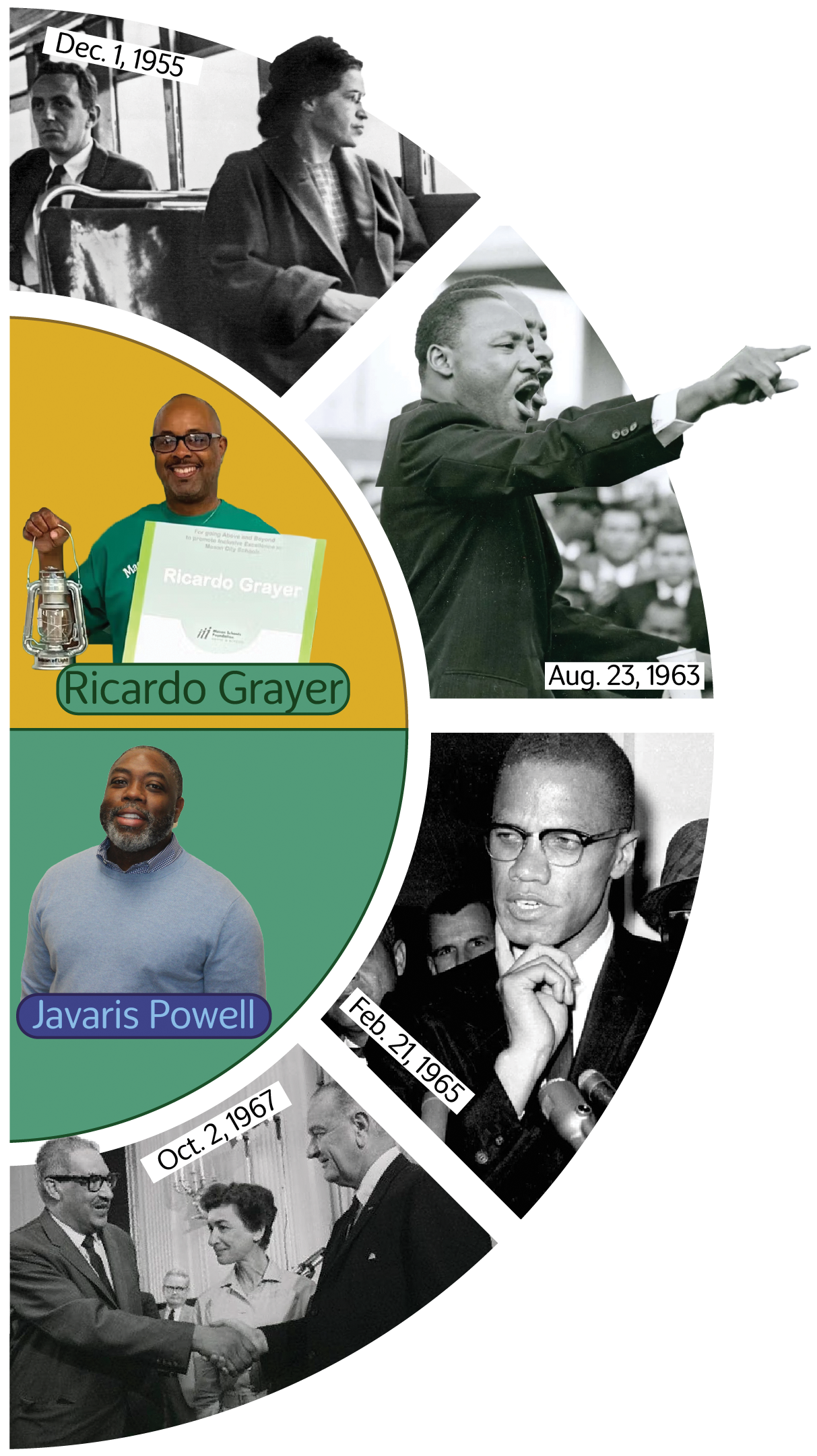
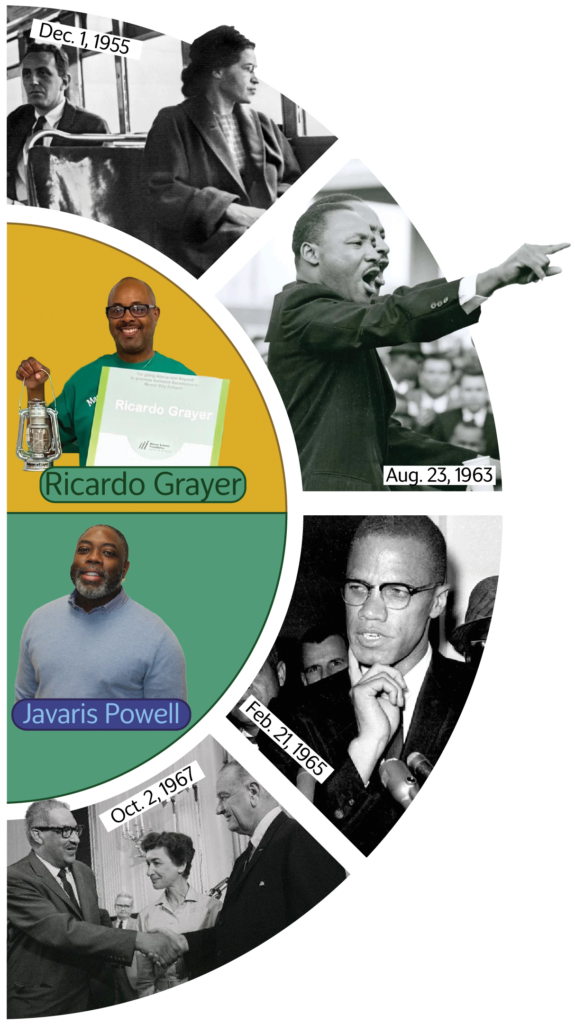
As students organize to raise awareness and build peer support, school leaders have noticed that the conversations students are having reflect broader questions about representation and education in Mason. These discussions emphasize the importance of learning about diverse histories and perspectives not only during Black History Month, but year-round. MHS Assistant Principal Javaris Powell thinks that building that understanding between students starts with education.
“In America, we are made up of so many different histories and lived experiences, to limit it to just at most 30 days out of a year, in my opinion, is ridiculous,” Powell said. “It should be something that is consistently studied and revisited. That is where it is incumbent upon all of us to learn more about the rich histories around us.”
The way history should be taught in schools has become increasingly politicized and debated nationwide, as districts in multiple states have scaled back on courses centered on African American history. In 2023, an all-white school board in Missouri voted to remove Black history and Black literature electives in the Francis Howell School District, according to TruthOut.org. Additionally, according to PEN America, there has been a rise across the country in curriculum restrictions and book bans involving race and history topics. These changes reflect broader disagreements about what students should be learning in schools. Powell said that, as he has witnessed these national discussions, his belief in the importance of cultural education has only been strengthened.
“The celebration and education of different cultures should not be an add-on,” Powell said. “It is something that should be across the curriculum. If you have one course, and you pluck away that one course, all of that learning that would have taken place in that one course is now gone. But if it is done throughout all of the courses, then [we can all] understand and see the richness there. It is very difficult to eliminate everything, but going through and taking things out in isolation is much easier to accomplish.”
Powell believes that when different perspectives are woven into everyday conversations, students learn beyond the limitations of the set curriculum. With a student body of over 3,400, MHS is home to a diverse range of cultures and ethnicities. He believes that the way schools present history and identity has an impact on how teens see their value within our community.
“Tolerance is being where you are allowed to come to the dance, [but] inclusion is when someone asks you to dance,” Powell said. “My hope is that our students feel that they are being asked to dance and not just being allowed to come into the space. I hope that everyone who comes in here feels that this is a place for them to grow and flourish.”
On Feb. 3, 2026, temporary protected status ended for nearly 500,000 Haitian immigrants nationwide. On Feb. 4, a 30-day “ICE surge” targeting Haitian residents in Springfield, Ohio began, according to The American Civil Liberties Union of Ohio. With heightened anxiety surrounding residents and students of color in a city only 59 miles away from Mason, Powell said moments like these reinforce why understanding and supporting others’ experiences is essential.
“I think all of us should care when anybody else is being oppressed because it is only a matter of time before that oppression comes knocking on our door,” Powell said.
For many students at Mason with immigrant backgrounds, these debates are not distant political headlines but realities. MHS senior Tomiwa Ogunfayo was born and raised in Nigeria until he was five years old. His family moved around a lot in his adolescence, from Egypt to Switzerland to Dubai, before finally settling in America. Ogunfayo said that his experiences of immigrating to the United States with his family shape the way he carries himself daily.
“Hard work and integrity are my biggest things,” Ogunfayo said. “I always make sure that wherever I am, I do my best and I am myself. It is especially important in a place like Africa, [because] if you do not work hard, it is hard to succeed. Even though I do not always have to work hard, I think I do it anyway, just because of where I come from.”
In June 2025, the Trump administration placed a full travel restriction on 12 countries (Afghanistan, Burma, Chad, the Republic of the Congo, Equatorial Guinea, Eritrea, Haiti, Iran, Libya, Somalia, Sudan and Yemen) on all non-immigrant and immigrant visas, according to the American Immigration Council. A ban on only immigrant visas was placed on seven other countries (Burundi, Cuba, Laos, Sierra Leone, Togo, Turkmenistan and Venezuela). Due to the travel bans placed on numerous African countries, Ogunfayo’s sister, a student at The Ohio State University, was unable to take a study abroad trip she had been interested in.
“It is discouraging to think that a lot of less privileged people came from third-world countries to America because they believed that they would have the opportunity to make a better life for themselves,” Ogunfayo said. “I think some of these barriers that are being put in place to combat them are a bit unfair.”
Ogunfayo said that although he does not know the next time he will go back to Nigeria, he stays connected to his culture through home-cooked food, religious music and conversations in his native language, Yoruba, at home. As he navigates a society that tolerates harsh rhetoric toward immigrants, Ogunfayo said he hopes more people understand that these issues extend beyond any one community.
“Everyone should be paying attention,” Ogunfayo said. “It should not matter whether [you] are an immigrant or Black or white, or if you have more of a stake in it. Even white people are immigrants to this country, at least originally and it is important for people to remember that. In that way, I think everybody’s history is the history of immigration, because the history of humans is moving around.”
Ricardo Grayer, a social studies teacher at Mason Middle School (MMS), said he has noticed how national conversations surrounding identity and politics have influenced the tone of student discussions. He noted that the language they hear at home, as well as the media they consume on their phones, has direct links to their attitudes toward others.
“I think that kids are becoming aware that being mean, being crass, being vulgar and being confrontational is a way to win,” Grayer said. “I hear people saying things that are mean-spirited and masking it with politics and saying, ‘this local, state or national leader said it, therefore it must be okay.’ Students are aware of the discourse, but not very many are open to understanding our commonalities as opposed to focusing on our differences.”
Grayer said that living in the Mason “bubble” affects students’ ability to empathize with others who live differently from them. He believes that one of the reasons society marginalizes certain experiences is due to inexperience and a lack of willingness to step outside of our comfort zones. Without exposure to a fuller understanding of history and lived experiences, he said, it becomes easier for these misconceptions to persist.
“At some point, we have to take accountability for teaching our children their story,” Grayer said. “The sad part is that some parents do not know their own story because they were denied access to it, and some of the [histories] were whitewashed. So our story is not being told, but the reason why [it] is not being told is that when you do not know your history, you will believe anything about your past and that will direct or redirect or misdirect your future.”
As a co-advisor of the Black Student Union at MMS, Grayer explained that one of his goals is to combat negativity and build a sense of community, while still having fun. In club meetings, students learn about the history of Black people in America, and are comforted by the presence of trusted adults in the building. During February, Grayer prioritizes putting one “little-known fact” about Black history on the whiteboard in his room each day, as a supplement to his students’ learning. While he makes an effort to diversify his curriculum, Grayer is aware that this is not the case in many standardized classrooms across the nation.
“I think one of the reasons why some of the teachers do not teach [diverse] history is because they do not know it,” Grayer said. “They have not been taught it and some are not curious enough to find out. [Many teachers] recycle the same names ‒ Malcolm X, Rosa Parks, Martin Luther King Jr. ‒ because that is all they know. And when you repeat a lie, the lie becomes what stands because the object is to get you to forget.”
An executive order, signed on Mar. 27, 2025, has put immense pressure on the Smithsonian National Museum of African American History and Culture in Washington, D.C., to “back off divisive, race-centered narratives” and tell an “upbeat story on American history,” followed by threats of defunding the institution as a whole, according to PBS News. Titled “Restoring Truth and Sanity to American History,” these demands have been viewed by activists and concerned citizens online as an attack on the preservation of Black history and an attempt to whitewash the stories of African Americans. On social media platforms, President Trump criticized the museum, alleging that “everything discussed at these woke museums is about how bad slavery was,” according to National Public Radio (NPR). Grayer said that efforts to soften the realities of Black history only prove why those stories must continue to be told without apology.
“So often [Black] history has been denied, or it has been covered up,” Grayer said. “Our contributions have been watered down or co-opted by other people. This [February], we have an opportunity to showcase [our accomplishments] and tell others exactly where we fit in, because we have often been marginalized and excluded. So when these museums are [threatened], it is another example of whitewashing history, because that history flies in direct contrast with the American exceptionalism narrative.”
As the nation marks 100 years of formally recognizing Black history, Grayer emphasized that the responsibility to learn and teach cannot rest solely on institutions, museums or 30 days on the calendar. He believes that it rests on young people to seek knowledge beyond what is required and challenge others to engage with perspectives that may be uncomfortable.
“‘Do not let school get in the way of your education,’” Grayer said. “That is a quote by Mark Twain and it is something that I tell my students and my four children all the time. The world is full of beautiful things and people who do not think or look or believe the same as you do, so learn as much as you can, about as many things as you possibly can, while you are able.”