
Michelle Zuo | The Chronicle
What does it mean to be “smart”?
Does it mean being in the gifted program in elementary school? Getting 100’s on every test? Taking the most Advanced Placement (AP) courses? The Merriam-Webster dictionary defines it as “having or showing a high degree of mental ability.” But what does that truly mean?
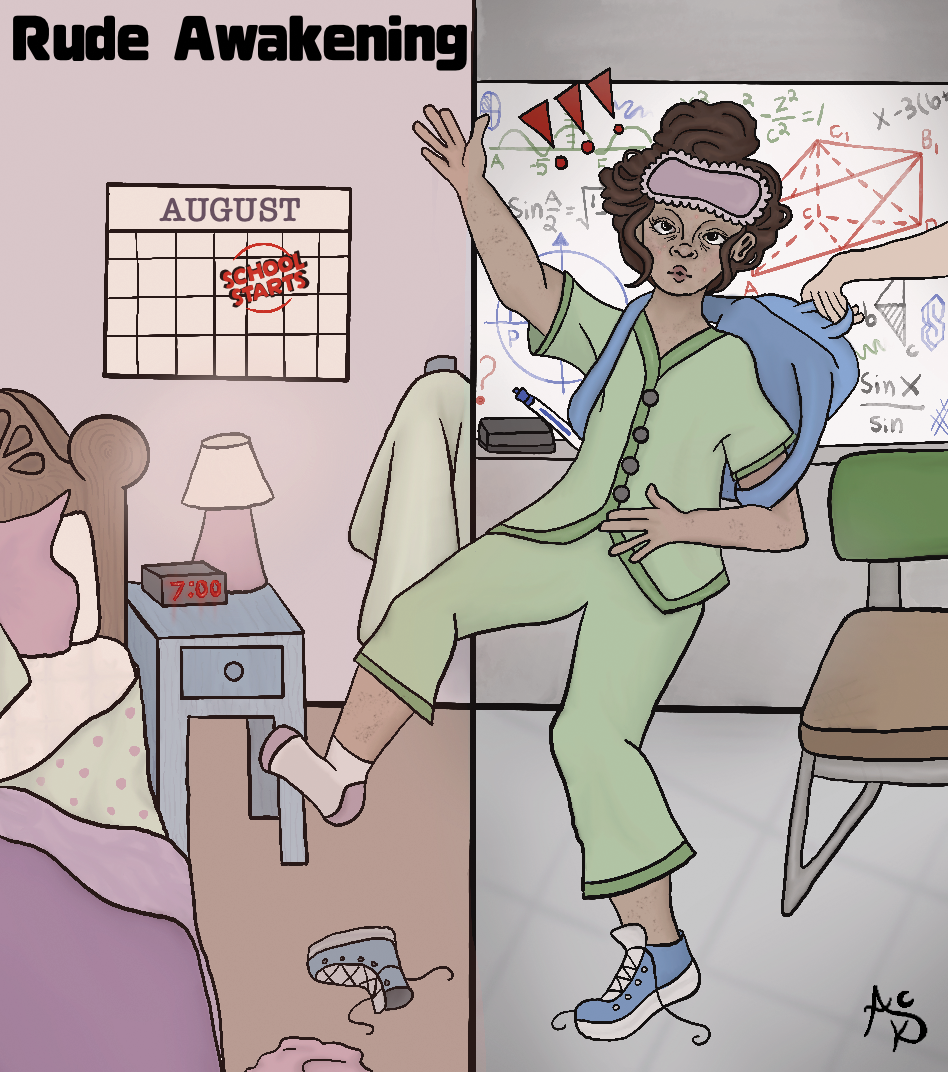
I have been dabbling with this question my whole life. Growing up as someone who failed the gifted program test eight times and struggled with math, I had the perception that I was never considered “smart.” The word “smart” was always associated with academic success. There were levels to it. Were you academically ahead? How many grades did you skip in math? What was your reading level in elementary school? In competitive environments like Mason High School, these questions are inevitable.
And in full honesty, I firmly believe that I was never naturally gifted or society’s definition of “smart.” I just began to force myself into that mold.
As I progressed through school, it seemed that the only good thing teachers could say was “Michelle has a lot of friends!” Sure, interpersonal intelligence (the ability to interact with others) existed, but how often was that emphasized to an elementary student who knew nothing else but being “smart” academically? My elementary self grew up thinking that being good at talking to people meant that I was farther and farther away from being “smart.”
A battle I continue to encounter is the intelligence war between the humanities and STEM. In modern-day society, survival rests upon job stability, prestige and salaries. As a result, parents tell their children that they should strive for high-earning jobs in medicine, engineering and other STEM-focused fields. As a result, those who have a natural inclination towards STEM, or receive higher grades in those subjects, seem to be “on track” to this goal, which leads to the label of being “smarter”. In comparison, “humanities people” who are “off track” are now seen as lesser. As someone who always thought of herself as a “humanities person”, I already felt inferior, much less “smart”.
Now that I am in high school, I still struggle to answer the question of what it means to be “smart.” However, I can conclude that all types of intelligence, whether it’s logic-based or emotional, are dependent on each other. Technology relies on ethics in the same way that discoveries rely on teamwork. Truly, there is no right answer, since losing one means losing all.
I see myself as living proof of how impactful it is to boil intelligence down to society’s current perspective of “smart.” Despite my improvements, that mindset continues to linger from my childhood. However, even if I may never see myself as “smart,” I refuse to let that belief limit the potential of our future generations. Which is why I urge others to understand. To understand that these differences should not be used to diminish and degrade others, but to form the mosaic that our society represents.